Air-Cooled Heat Exchanger Maintenance And Cleaning
Knowledge base
An air-cooled heat exchanger - a radiator or dry cooler - has few moving parts and asks for little, but what it asks for it asks for firmly. A coil that is left to foul loses airflow and capacity month by month, and the first sign is an engine that derates on a hot afternoon or a chiller that trips on high pressure. Fans, motors, the coolant and the casing each have their own checks. This guide lists them, with the intervals that experience suggests and the signs that say a check is due now.
The Coil: Fouling And Cleaning
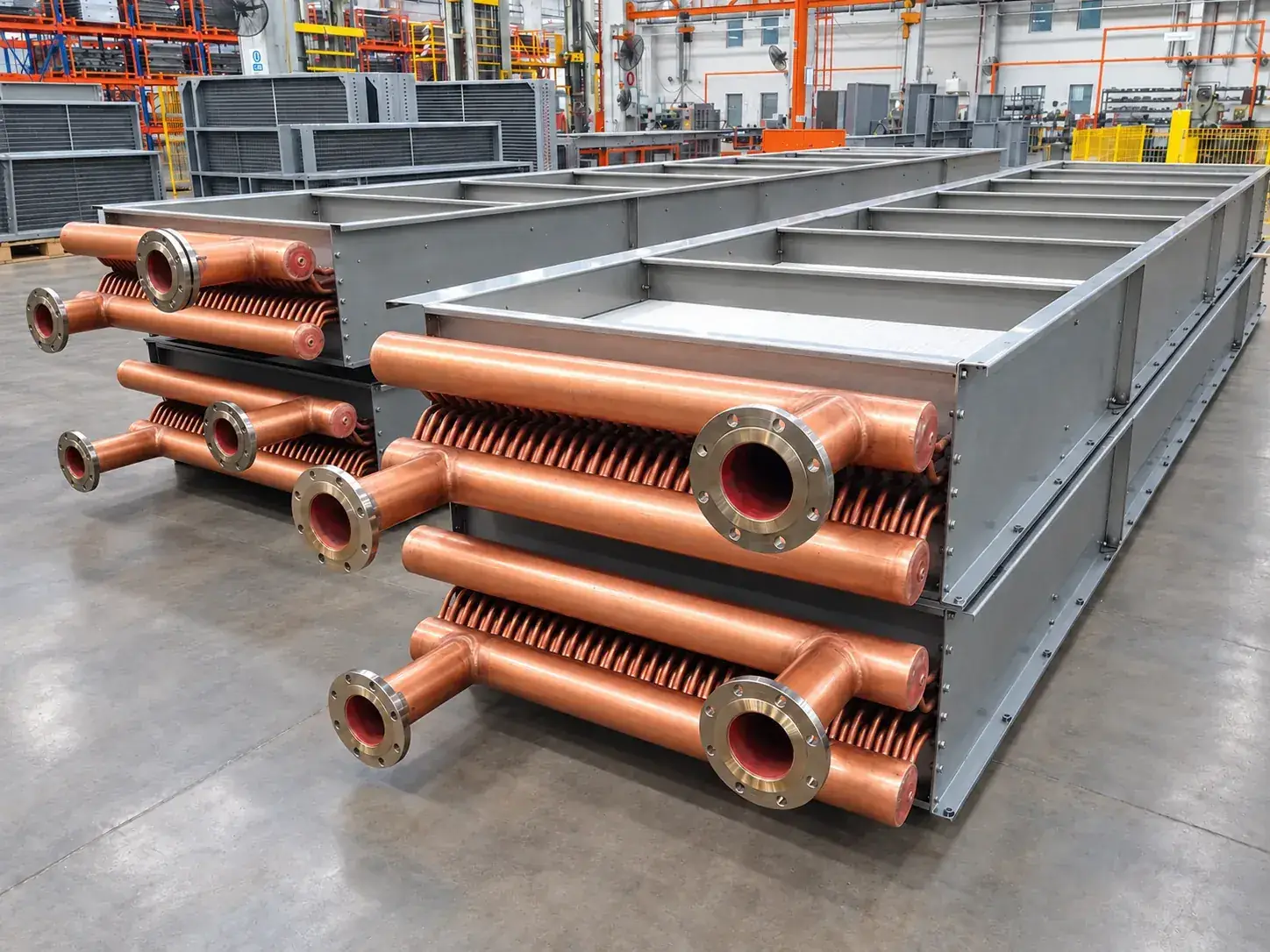
A finned coil is a filter whether it wants to be or not. Dust, sand, seeds, fibres and insects deposit on the leading edge and in the fin channels; oily air glues them in place. The air-side pressure drop rises, the fans deliver less, the air leaves hotter and the capacity falls. A trend of fan current or of the difference between coolant and air temperature over the months tells the story before the alarm does.
Cleaning is done with low-pressure water or compressed air against the direction of the airflow - from the clean side towards the dirty side, so that the deposit is pushed out the way it came in. High-pressure jets bend fins and close the channels; a soft brush and a mild detergent handle oily films. The interval depends on the site: a clean site may need one cleaning a year, a cement works or a desert site one every few weeks in the dusty season. Coils designed for dusty sites with wider fin pitches and flat fins are cleaned more easily and less often.
Fans, Motors And Guards
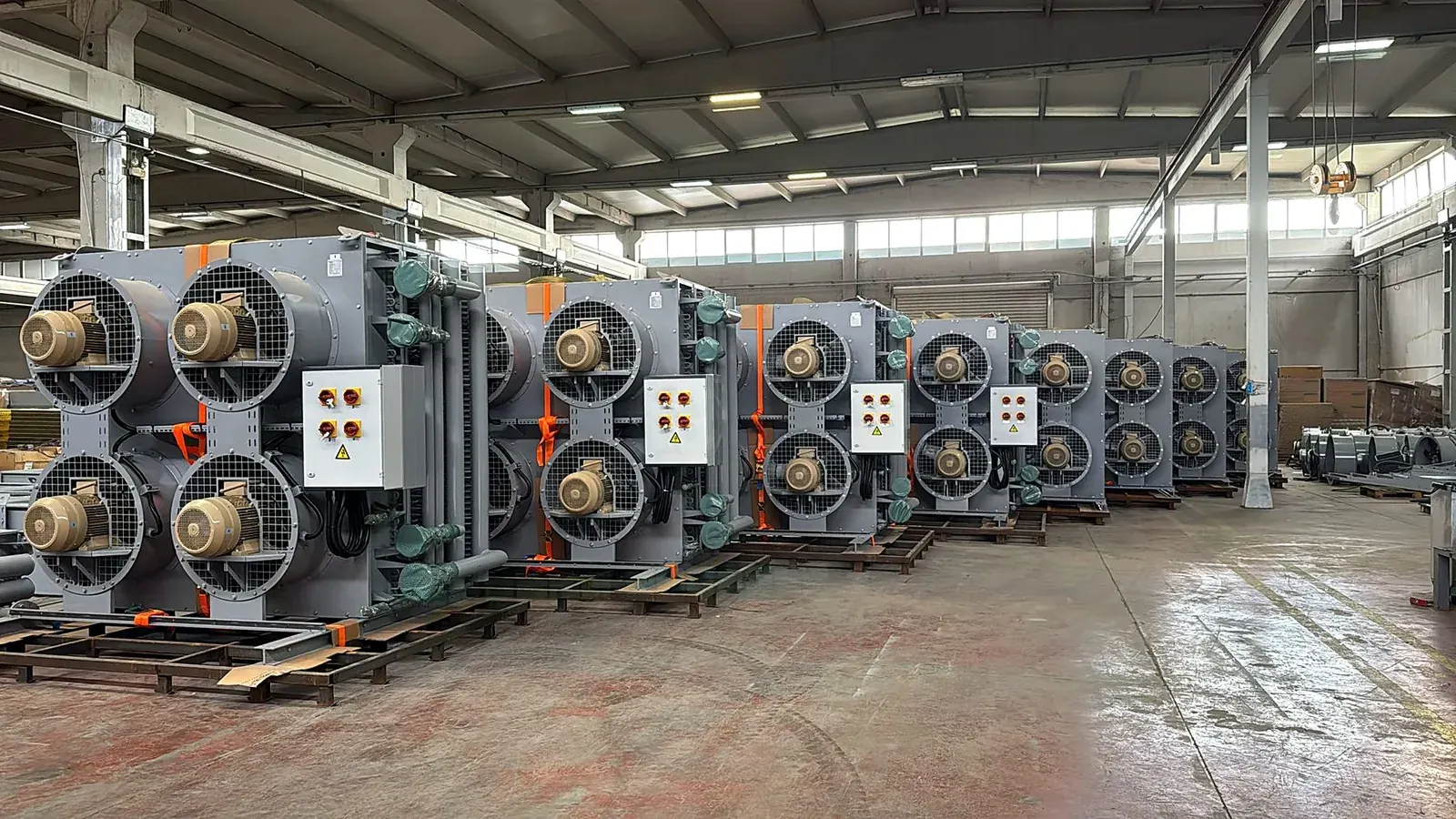
Fans are checked for free rotation, vibration, loose blades and the condition of the guard; a bent blade or a loose guard shows up as vibration before it fails. Motors are checked for current against the nameplate - a rising current with a fouled coil, a falling one with a slipping belt on a mechanical radiator - for bearing noise, for the condition of the cable glands and for water in the terminal box. EC fans report their own faults to the control panel; the panel's log is the first place to look.
Belt-driven fans need belt tension and alignment checks at the engine maker's interval. Guards and bird screens are kept clear; a guard half blocked by leaves costs as much airflow as a fouled coil.
Coolant, Leaks And Corrosion
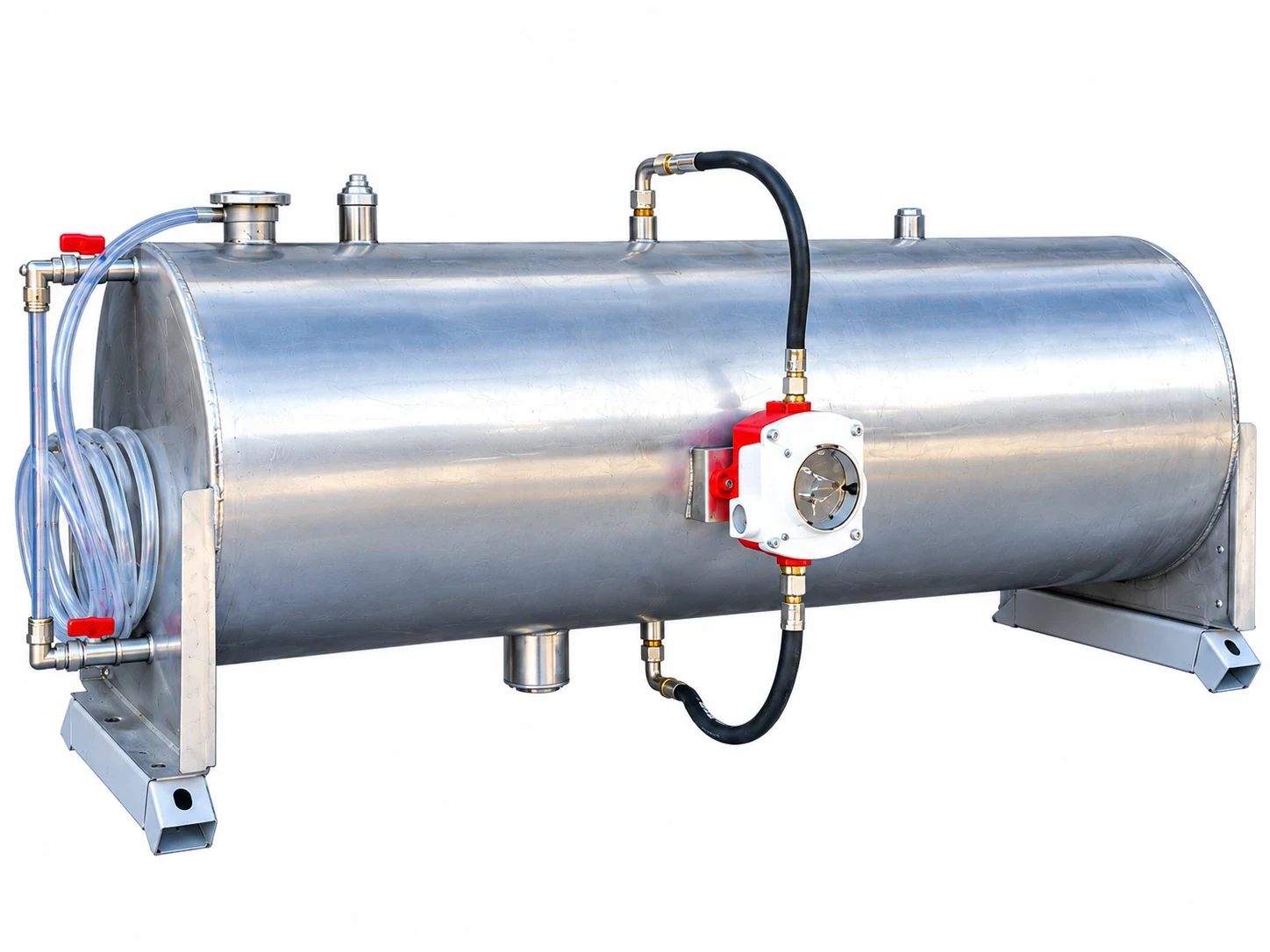
The coolant level in the expansion tank is checked and the level switch tested; a slowly falling level means a leak, usually at a connection or a tube end, and is found by a visual check of the collectors and the coil face. The glycol percentage is checked with a refractometer once a season and the inhibitors at the engine maker's interval; a circuit topped up with plain water has lost its frost protection.
The casing, the frame and the fasteners are inspected for corrosion once a year, more often on a coast; white deposits on aluminium fins and rust streaks at bolted joints are the early signs. Touch-up paint on a galvanised casing and a check of the earthing close the inspection. Everything found is written in the unit's log, so that the trend is visible the next time.
A Maintenance Schedule In Short
Monthly: coolant level, fan rotation and vibration, control panel log, guards clear
Each season: coil face inspection and cleaning as the site requires, glycol percentage
Yearly: motor currents, bearings, belts and alignment, casing and fastener corrosion, earthing
After every dust storm or pollen season: coil cleaning
At the engine maker's interval: coolant inhibitor test and coolant change
Always: record the figures, so that the trend shows the next problem early
The fans draw more current, the air leaving the coil is hotter, the coolant comes back hotter than it used to at the same load and ambient, and the fin face looks grey or furred. A pressure or temperature trend shows it weeks before the engine notices.
Can I use a pressure washer?
Only at low pressure, with a wide fan nozzle, held at a distance and aimed straight at the fins against the airflow direction. A high-pressure jet at an angle bends the fins and closes the channels, which is worse than the dirt.
What about chemical cleaning?
A mild alkaline coil cleaner handles oily deposits; it is rinsed thoroughly, because residues attack aluminium. Acid cleaners are not used on aluminium fins. On epoxy-coated coils the coating maker's cleaner is used.
How long does a radiator last?
Twenty years and more with a cleaned coil, a maintained coolant and a casing that is kept free of corrosion. On a coast the fin material and the coating decide the life; a plain aluminium coil at the surf line may need replacing after a few years, an AlMg2.5 or coated coil lasts.
Can an old radiator be upgraded?
A new coil in the old casing, with a fin pitch and material suited to the site, and EC fans with a control panel in place of fixed-speed motors are the usual upgrades; both are designed by TECS to the existing dimensions.
Send us the heat duty, the fluid temperatures and flow rates, the ambient conditions and the installation limits. We answer with a design proposal - or write to us on WhatsApp.