Glycol In Cooling Circuits: Why 40 To 50 % And What It Does To Capacity
Knowledge base
Almost every engine cooling circuit and every outdoor dry cooler runs on a mixture of water and glycol rather than on water alone. The glycol keeps the circuit from freezing, raises its boiling point and - in the engine coolants of the engine makers - carries the inhibitors that protect the metals. It also makes the liquid a worse coolant: thicker, heavier and with less heat capacity per litre, so a radiator on 50 % glycol is larger than the same radiator on water.
This guide explains what the percentage does and how it is chosen and specified.
Why Glycol At All
A radiator stands outside. On the first frosty night, water in its tubes freezes, expands and splits the copper; the damage shows in spring as leaks. Ethylene glycol in the water lowers the freezing point - about −10 °C at 25 %, −22 °C at 40 %, −37 °C at 50 % by volume - and it raises the boiling point a few kelvin, which helps a pressurised engine circuit at altitude. Propylene glycol does the same with lower toxicity and is used where the coolant could reach food or drinking water, at the cost of a still thicker liquid.
Engine makers go further: their coolants are glycol mixtures with inhibitor packages against corrosion, cavitation and scale, and they specify the mixture and its maintenance. For an engine radiator the coolant is therefore the engine maker's coolant, and the radiator is designed to it.
What It Costs In Capacity
Three properties change. The specific heat of a 50 % ethylene glycol mixture is about 15 % below that of water, so a litre carries less heat for the same temperature change; the density is a little higher; and the viscosity is two to four times that of water, which weakens the heat transfer inside the tubes and raises the pressure drop. Together they mean that a radiator rejecting a given duty on 50 % glycol needs more surface than on water - commonly 10 to 20 % more, depending on the flow and the temperatures - and shows a higher coolant-side pressure drop at the same flow.
Below about 20 % the frost protection is poor and the inhibitor concentration is too low for an engine coolant; above 60 % the mixture protects no better and cools worse. That is why 40 % is the usual standard - frost protection to about −22 °C with a moderate penalty - and 50 % the choice for cold sites. The percentage must be in the enquiry: a radiator designed for water and filled with 50 % glycol is short of capacity from the first day.
Specifying, Filling And Checking
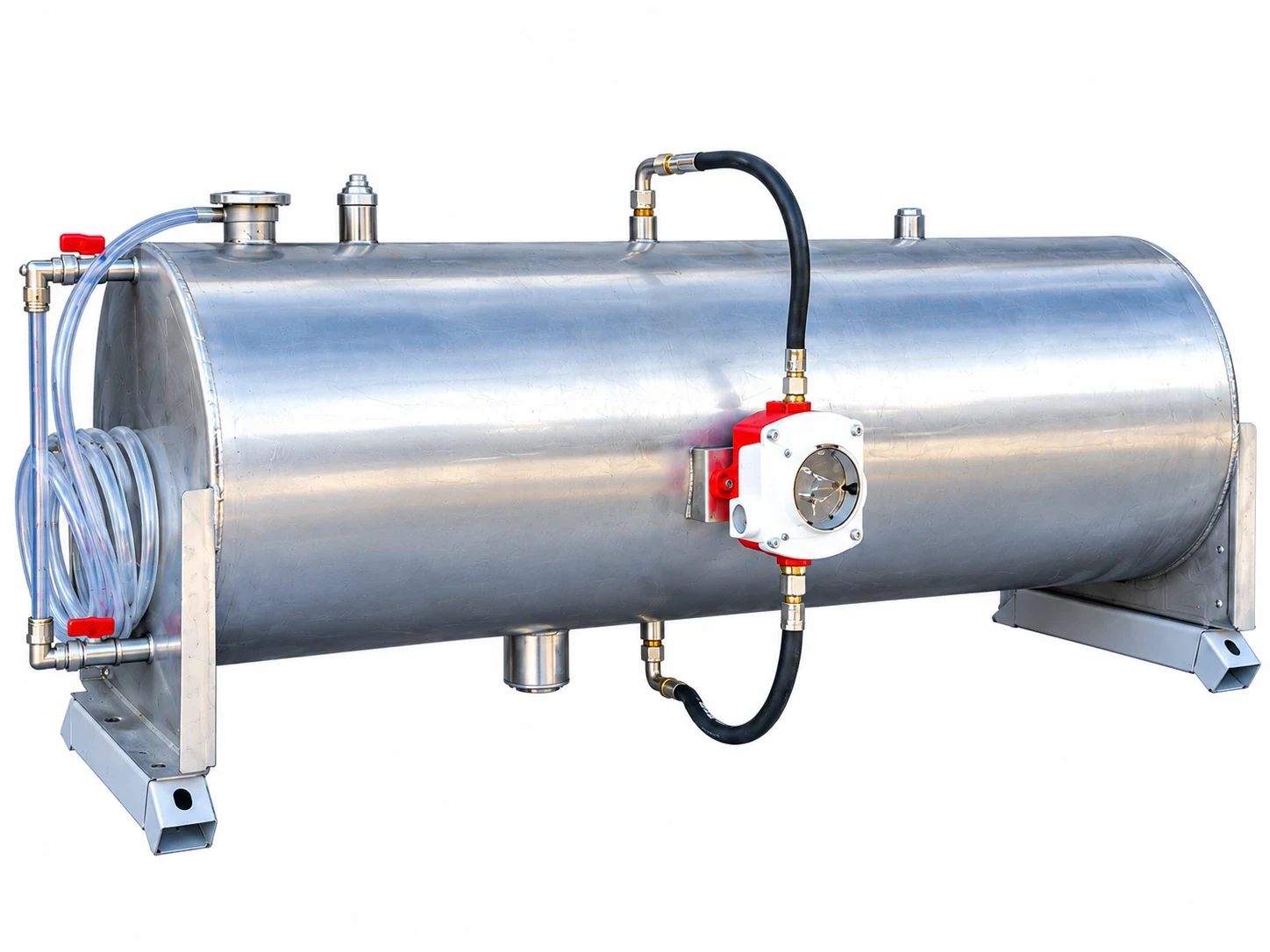
The datasheet states the coolant and the percentage the capacity belongs to, and the design uses the properties of that mixture at the operating temperature for the coil and the hydraulics. The expansion tank is sized for the mixture's expansion between cold fill and operating temperature, which is larger than that of water. The level switch and the pressure cap follow the engine maker's pressure.
On site the mixture is made with clean, soft water - the engine maker usually limits hardness and chlorides - and checked with a refractometer; a premixed coolant avoids the mistake. Glycol ages: its inhibitors deplete, and the engine makers prescribe test intervals and a change after a number of years or hours. A circuit that has been topped up with plain water several times has lost its frost protection without anyone noticing.
In Short
Glycol protects against frost and raises the boiling point; engine coolants add inhibitors
40 % ethylene glycol protects to about −22 °C, 50 % to about −37 °C
The mixture has less heat capacity and more viscosity than water: more surface, more pressure drop
A radiator is designed for the stated percentage and the datasheet says which
The expansion tank is sized for the mixture, the water quality to the engine maker's limits
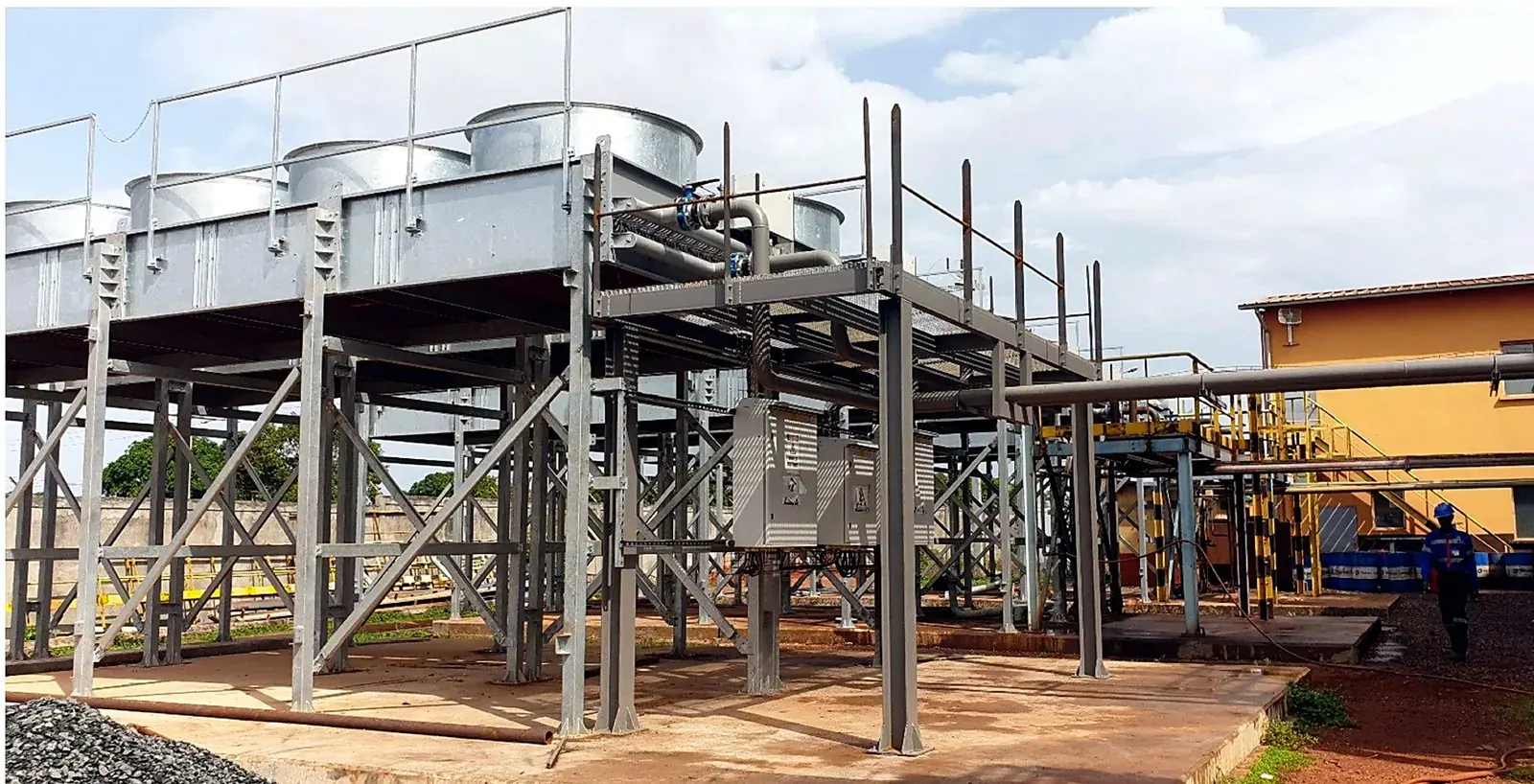
TECS designs every radiator and dry cooler for the coolant that will be in it
Only where it can never freeze and the engine maker allows it; most require an inhibited coolant for corrosion and cavitation protection regardless of frost. If a radiator was designed for glycol, water will give it more capacity, not less.
How much capacity does 50 % glycol cost?
Compared with water, a radiator for the same duty needs in the region of 10 to 20 % more surface, and the coolant-side pressure drop at the same flow is noticeably higher. The exact figures are a design result for the flow and the temperatures.
Is propylene glycol better?
It is less toxic, which matters where the coolant could reach food, drinking water or the ground. It is more viscous than ethylene glycol and cools a little worse, so the radiator grows a little more. Engine makers specify which is allowed.
What percentage for a site that never freezes?
Whatever the engine maker prescribes for corrosion protection - often 30 to 40 % even in a hot climate. For a dry cooler without an engine, a low percentage or an inhibitor-only treatment can be used.
Does the glycol affect the expansion tank?
Yes. A glycol mixture expands more than water between cold and hot, so the tank is sized for the mixture. TECS sizes the expansion tank for the stated coolant and the circuit volume.
Send us the heat duty, the fluid temperatures and flow rates, the ambient conditions and the installation limits. We answer with a design proposal - or write to us on WhatsApp.