Dry Cooler Vs Radiator Vs Cooling Tower: Which Cooling System?
Knowledge base
Every engine, chiller and process ends in the same problem: heat that has to go somewhere. The three machines that take it to the atmosphere are the dry cooler, the radiator and the cooling tower, and they are often confused because the first two are nearly the same thing under different names. This guide puts the three side by side - how they work, how cold they can get, what they consume and what they cost to own - so that the choice is made for the right reasons.
Dry Cooler And Radiator: One Machine, Two Names
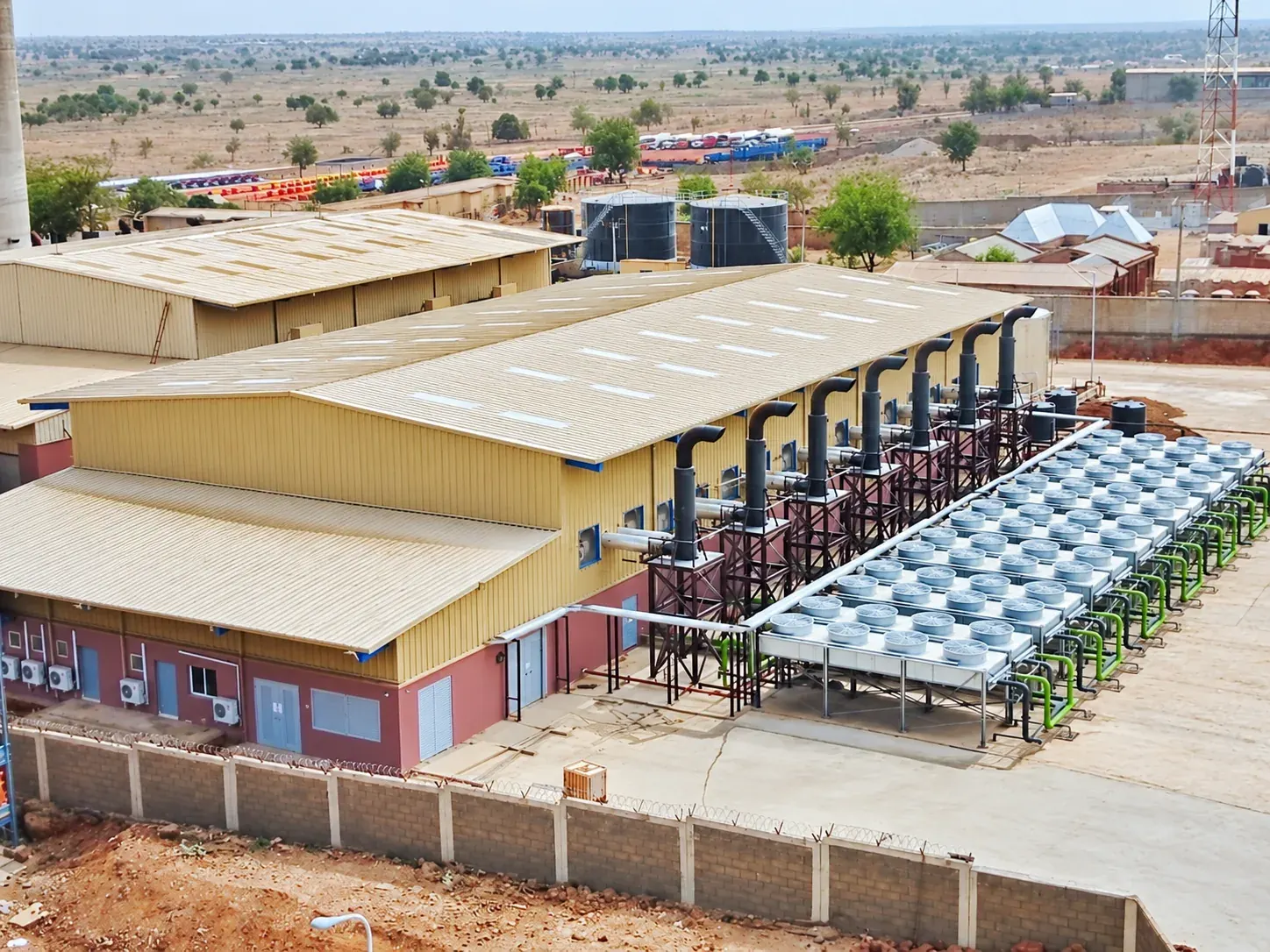
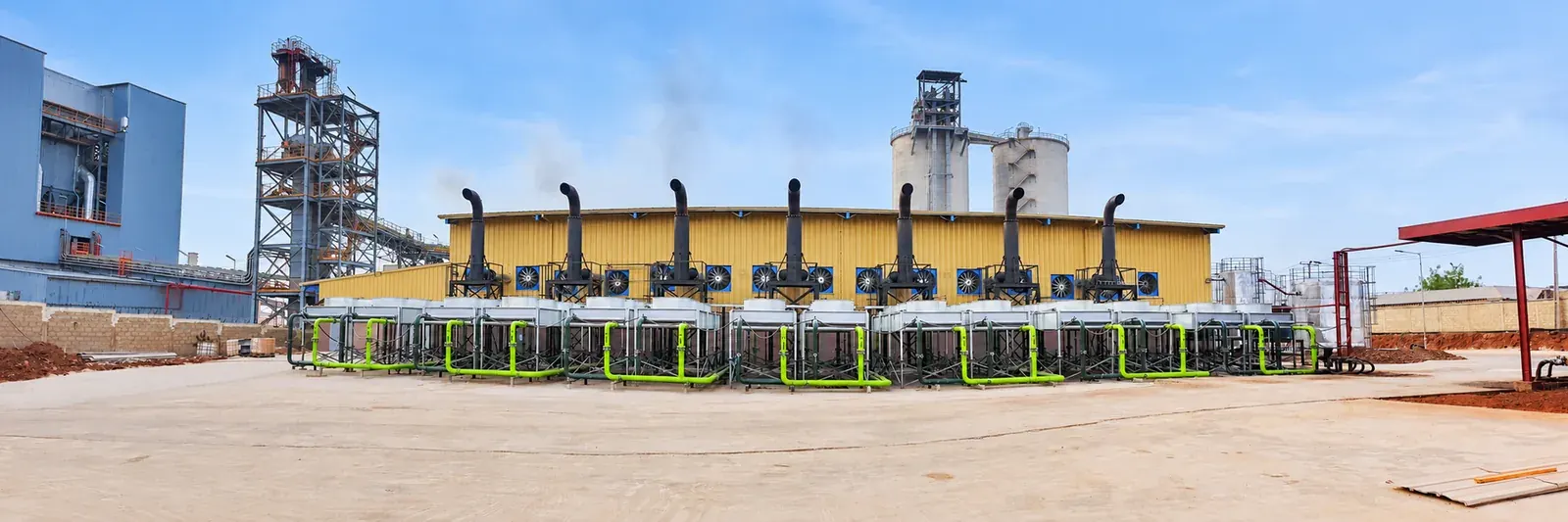
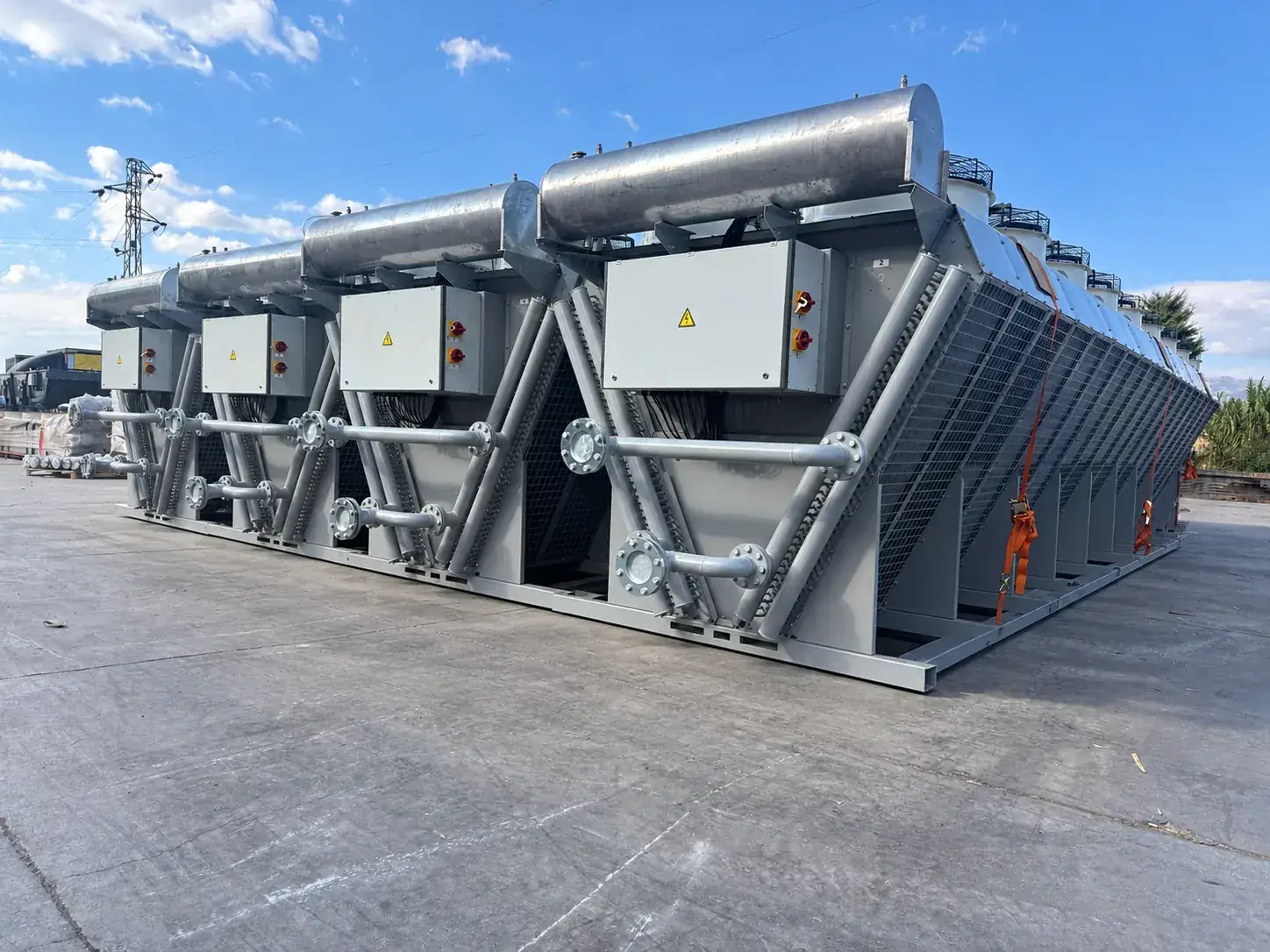
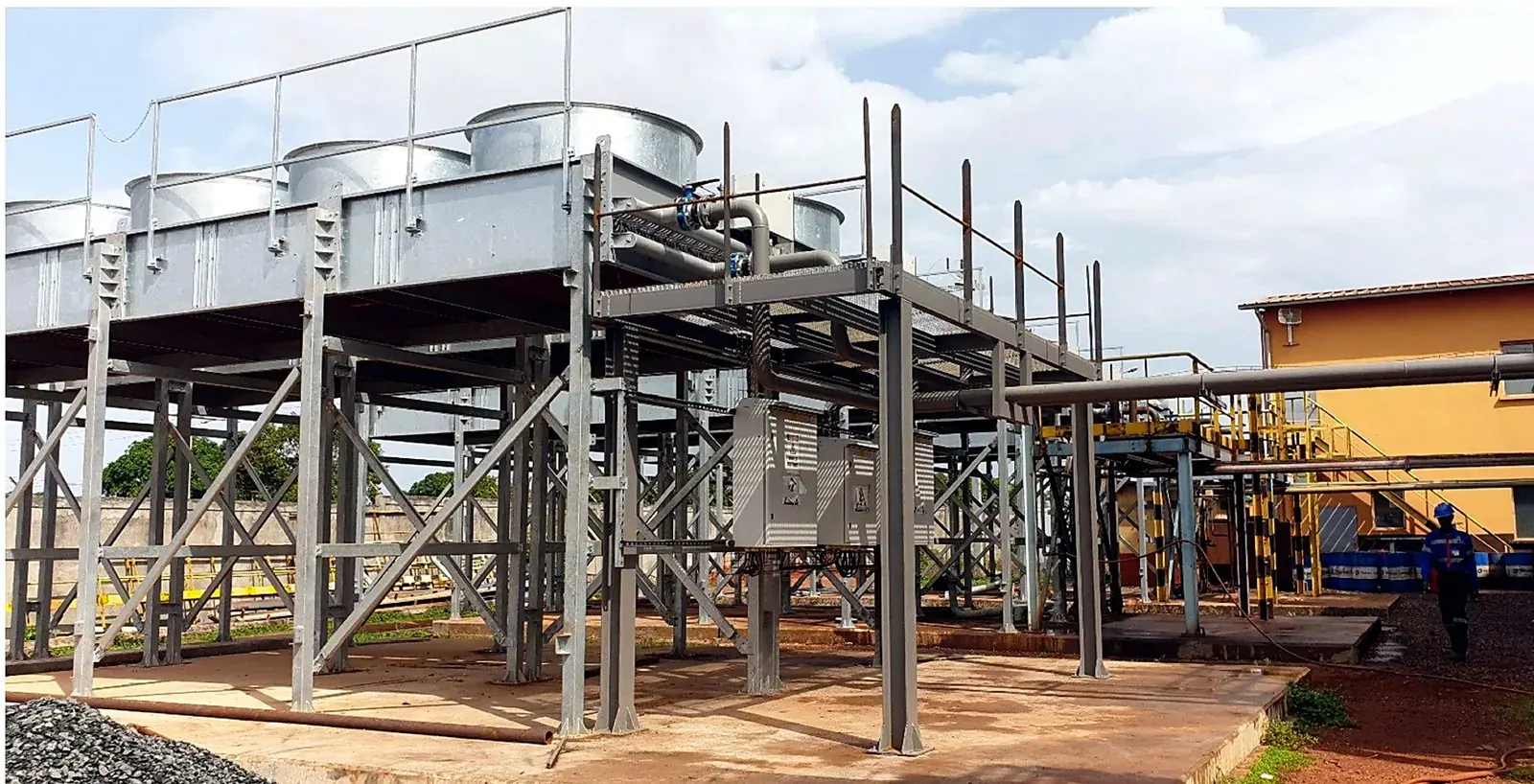
Both are air-cooled heat exchangers: a finned tube coil, fans, a frame. The liquid stays inside the tubes, the air passes the fins, nothing evaporates. The HVAC world calls the unit a dry cooler; the engine world calls it a radiator - an engine-mounted radiator when it sits on the generator-set skid with a belt-driven fan, a remote radiator when it stands apart with electric fans. The design, the materials and the limits are identical.
What differs is the duty. An engine radiator is designed to the engine maker's figures - a coolant flow, an outlet temperature, a maximum pressure drop, often two circuits - and to the hottest day the engine must still deliver full power. A process dry cooler is designed to a process temperature. TECS builds both from the same coils and fans.
The Cooling Tower: Evaporation Instead Of Air Alone
A cooling tower sprays the warm water over a fill and draws air through it. Part of the water evaporates, and the evaporation takes the heat: roughly 2,400 kJ for every kilogram that turns to vapour, which is far more than air alone could carry. The water that remains is cooled towards the wet-bulb temperature of the air, which on a dry summer day is 10 K or more below the dry-bulb temperature a dry cooler is limited by.
The price is water and care. A tower consumes make-up water for evaporation, drift and blow-down, needs chemical treatment against scale, corrosion and legionella, produces a visible plume in cold weather and can freeze. For a plant with water available and a process that needs cold water, it is the economical choice; for a generator set or a site without water, it rarely is.
Temperatures, Water, Noise And Footprint
Temperature: a dry cooler or radiator delivers the liquid a few kelvin above the ambient dry-bulb temperature; a cooling tower a few kelvin above the wet-bulb temperature, which is lower. An engine does not need cold water - its jacket water runs at 90 °C or more - so the dry cooler's limit is no handicap there; a chiller condenser or a process at 30 °C may need the tower.
Water: zero for the dry cooler, continuous for the tower. Noise: both have fans; the dry cooler can be built long with slow EC fans and designed to a sound limit at the fence, the tower adds the sound of falling water. Footprint: a tower is compact for its duty; a dry cooler needs coil face area, which a V-type arrangement halves. Maintenance: the dry cooler is cleaned with water or air; the tower needs water treatment, fill cleaning and a legionella regime. Cost: the dry cooler is the simpler and usually the cheaper installation to own, the tower often the cheaper to buy.
Which One For Which Plant
Generator sets, engine power plants and gas-engine CHP units: the dry cooler as a remote radiator, single circuit or LT/HT, or the engine-mounted radiator on an open skid. Data center backup generators: remote radiators or V-type units on the roof, designed to the sound limit. Data center chillers and process cooling: dry coolers where water is scarce or the plant must stay dry, cooling towers where water is available and the temperature must be low. Gas turbines: a different question, answered with inlet air coils.
TECS builds the air-cooled side of all of these - horizontal, vertical and V-type remote radiators, LT/HT units, emergency coolers for CHP and the heating modules that go with gas-engine plants. For a comparison on your own figures, send the heat duty, the temperatures and the site, or the engine data sheet, and the proposal shows the unit that fits.
In Short
Dry cooler and remote radiator: the same air-cooled machine, no water, limited by the dry-bulb temperature
Engine-mounted radiator: the same coil on the skid, driven by the engine
Cooling tower: evaporation, colder water, continuous water consumption and treatment
Engines run hot and do not need the tower's cold water
Noise, footprint and maintenance favour the dry cooler in most engine installations
TECS designs the air-cooled option for every engine, plant and data center duty
Where the process accepts a liquid temperature a few kelvin above the ambient dry-bulb, yes, and it removes the water consumption and treatment. Where the process needs water close to the wet-bulb temperature, the dry cooler would have to be very large, and an adiabatic dry cooler or the tower is the answer.
Why do generator sets use radiators and not cooling towers?
Because engine coolant runs at 80 to 100 °C, far above any ambient, so the radiator has plenty of temperature difference, and because a standby set must work without water, treatment or attendance. A radiator is also the engine maker's standard cooling system.
Which is quieter?
A well-designed dry cooler with speed-controlled fans. Its noise is the fans only, and the fans can be slowed down whenever the full duty is not needed; a tower adds the sound of the water and runs its fans whenever it runs.
Which needs less maintenance?
The dry cooler: periodic cleaning of the coil and the usual checks of fans and motors. A tower needs continuous water treatment, blow-down, fill and basin cleaning and legionella control.
What about hybrid or adiabatic coolers?
They are dry coolers that wet the incoming air on hot days to gain a few kelvin of approach. They use little water, only when needed, and are chosen for very hot sites where a pure dry cooler would be too large.
Send us the heat duty, the fluid temperatures and flow rates, the ambient conditions and the installation limits. We answer with a design proposal - or write to us on WhatsApp.