How An Engine Radiator Works And What A Remote Radiator Is
Knowledge base
An engine turns about a third of its fuel into shaft power. Another third leaves with the exhaust, and most of the rest goes into the coolant: the water-glycol mixture that circulates through the cylinder jackets, the charge-air cooler and often the oil cooler. The radiator is where that coolant gives its heat to the air so that it can go round again, and on the hottest day of the year at full load it still has to keep the engine inside its maker's temperature limits.
This guide explains the circuits, the two kinds of radiator - engine-mounted and remote - and what decides between them.
The Cooling Circuits Of A Modern Engine
Smaller engines have one circuit: the pump pushes coolant through the engine, out to the radiator and back, with a thermostat holding the temperature around 85 to 95 °C. Larger engines - from a few hundred kilowatts up - have two. The high-temperature (HT) circuit cools the cylinder jackets and the first stage of the charge-air cooler and leaves the engine at 90 to 100 °C. The low-temperature (LT) circuit cools the second charge-air stage and the oil, and must return to the engine at 45 to 60 °C, because the engine's rating and its emissions depend on cool, dense intake air.
An LT/HT radiator puts both coils into one casing under one row of fans, the LT coil first in the air stream because its outlet is closest to the ambient. Each circuit has its own flow, its own outlet temperature and its own limit on external pressure drop from the engine maker, and the radiator is designed to all of them at once.
The Engine-Mounted Radiator
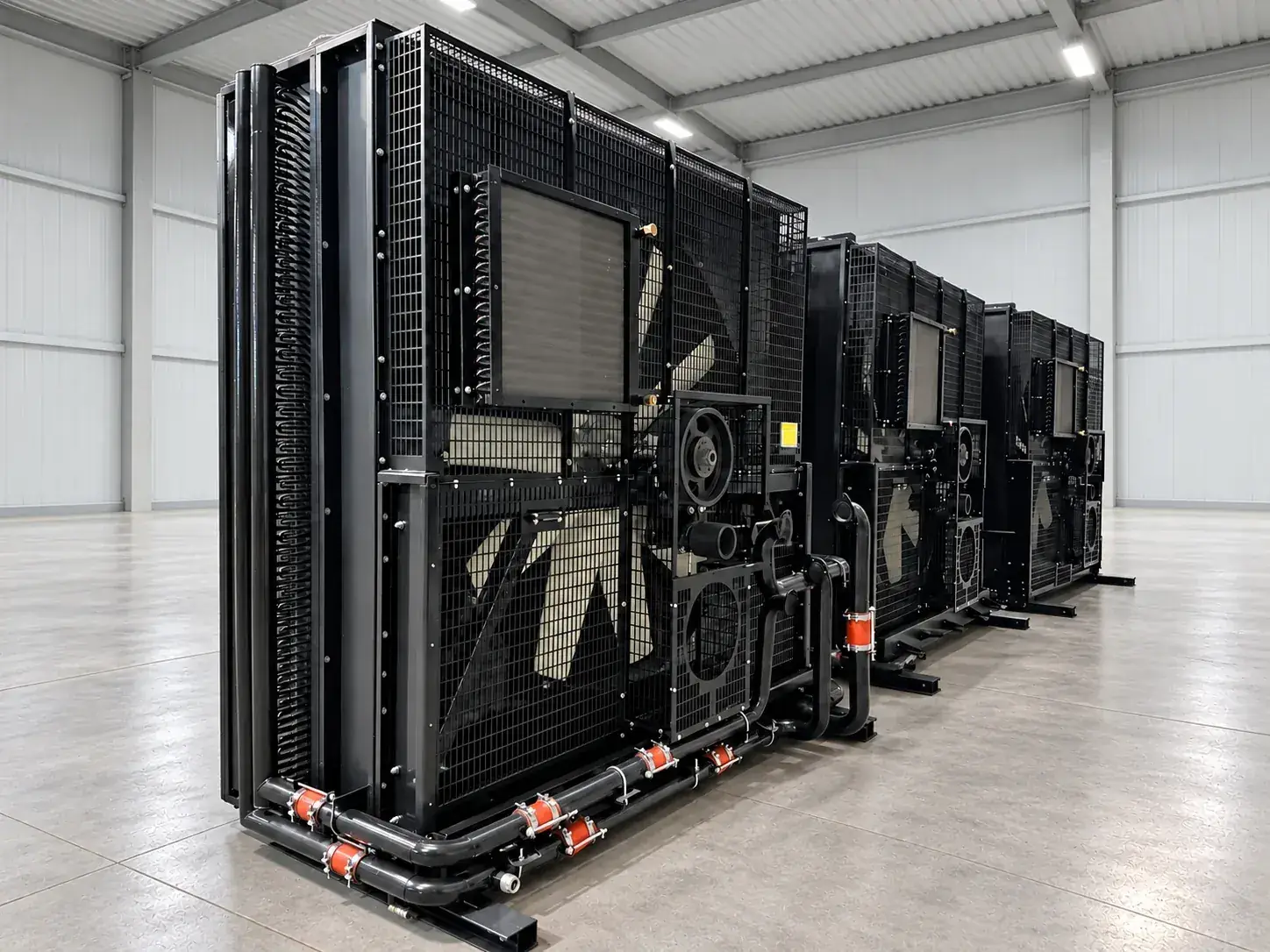
The classic generator-set radiator stands on the skid in front of the engine, and its fan is driven by the engine through a belt or a shaft: a mechanical driven radiator. It is self-contained - no electric fan power, no control panel, no pipework - and it is the engine maker's standard package for an open plant room or an outdoor canopy. Its fan takes a few percent of the engine's output, turns whenever the engine turns, and draws its air through the engine room.
That last point is its limit. In a closed room the inlet opening, the discharge duct and the attenuators on both must be sized for the full airflow of the fan, the room gets warm, and the fan runs at one speed and one sound level. TECS builds mechanical driven radiators as complete vertical packages matched to the engine; where the room, the heat or the noise argue against them, the remote radiator takes over.
The Remote Radiator
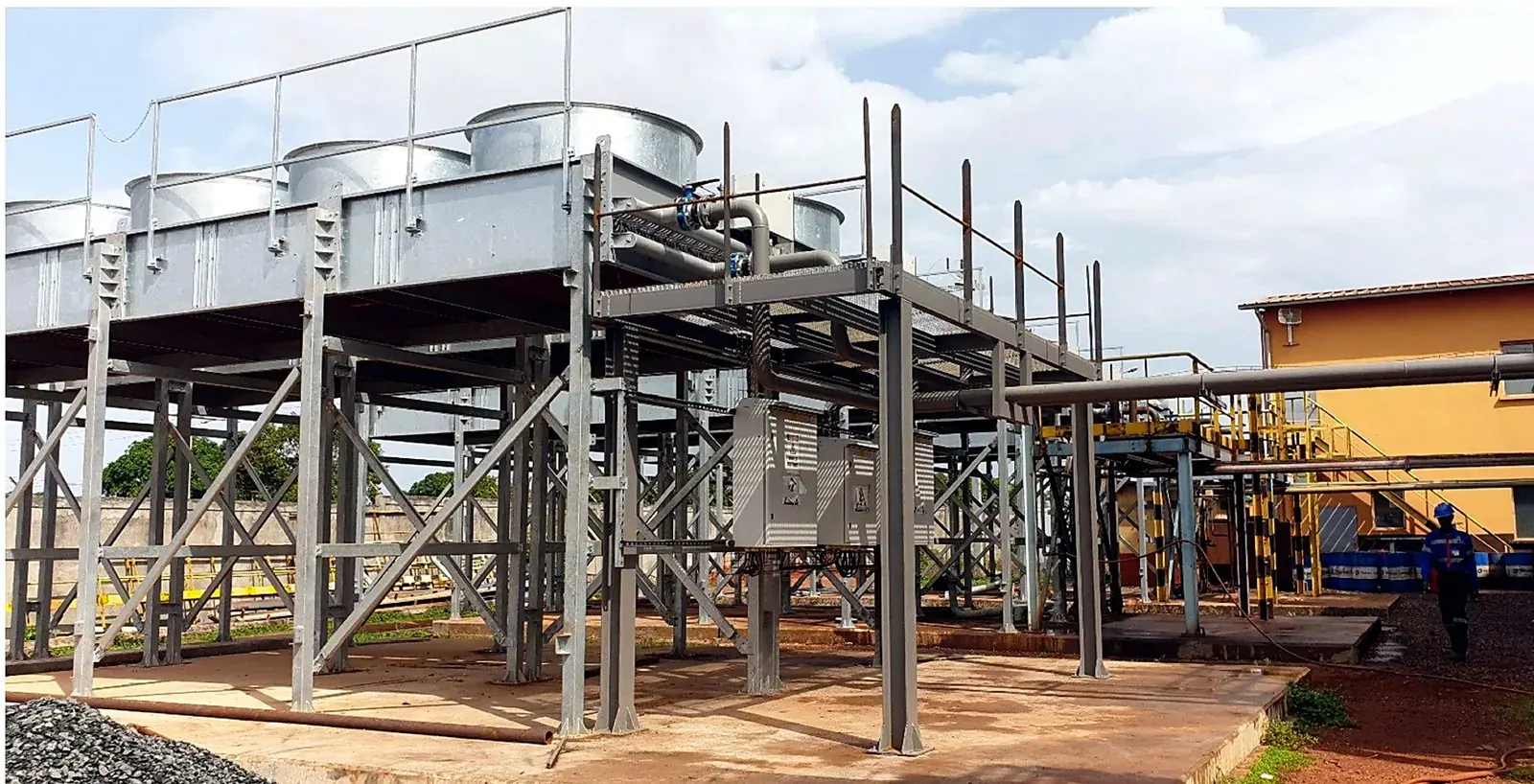
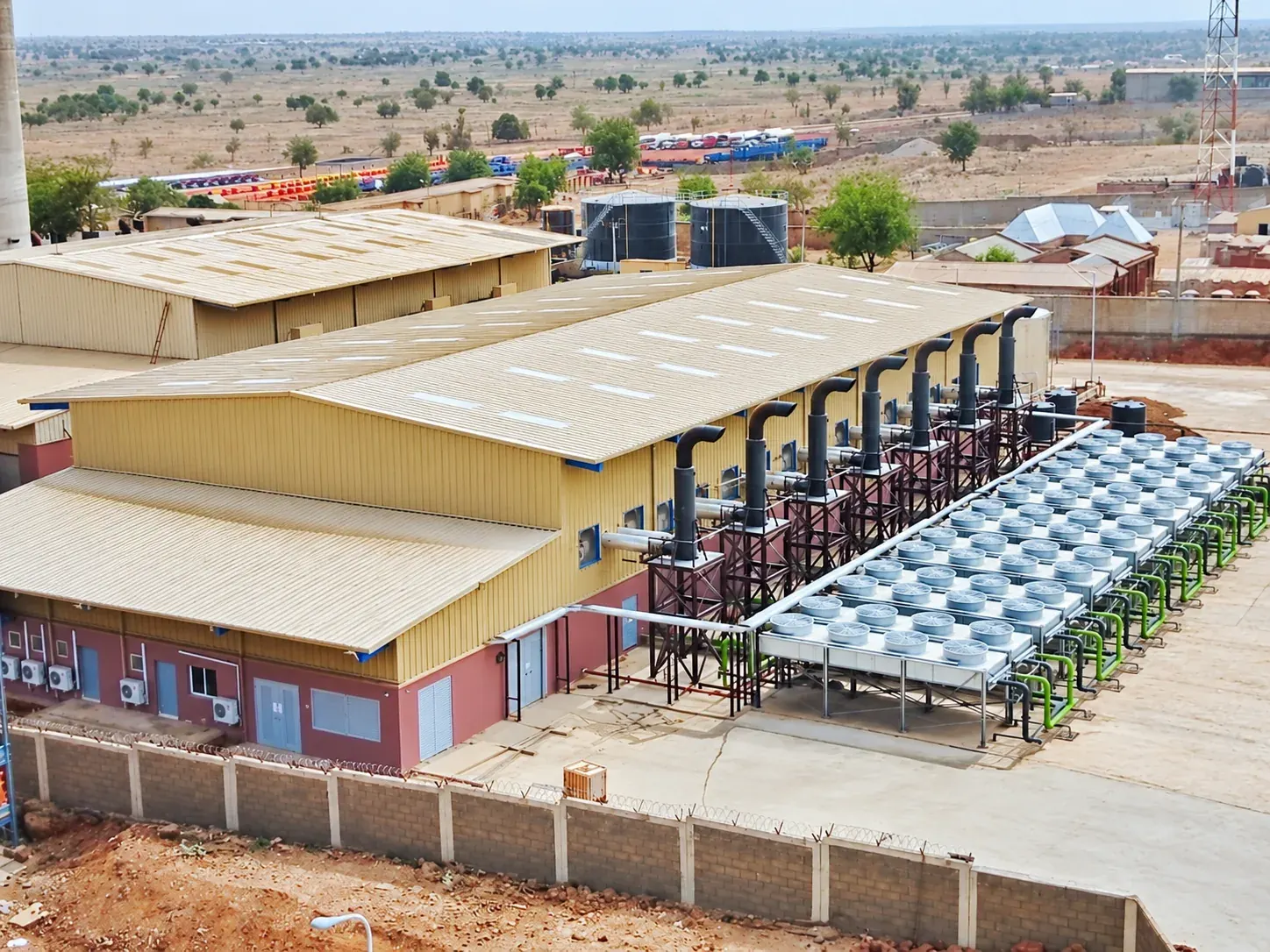
A remote radiator stands apart from the engine - outside the building, on the roof, on a platform - and has its own electric fans. The coolant reaches it through pipework; the engine room only has to ventilate the heat radiated by the engine and the alternator. The fans take their power from the auxiliary supply and, with EC motors or a frequency converter, run only as fast as the coolant temperature asks: on a cool day or at part load the fan power falls with the cube of the speed, and the sound level with it.
It is the same machine the HVAC world calls a dry cooler, designed to the engine maker's figures. Horizontal with the fans on top where there is ground, vertical against a louvre where the air is ducted, V-type where many units must share a small plot. Hot, high, dusty or coastal sites change its size and its materials, not its principle; a sound limit at the fence is met with more and slower fans and a longer coil.
Choosing Between The Two
Open skid, no sound limit, standby duty: the engine-mounted radiator is the simpler and cheaper package. Engine in a building or a container, a noise-sensitive site, several sets side by side, prime or continuous power, a hot engine room: the remote radiator. Many generator-set builders offer both and let the installation decide; TECS designs and builds both, to the same engine data sheet.
For a proposal, send the engine make and model with its cooling data sheet, the site ambient and altitude, where the set will stand and any sound limit - or send the drawings and the data sheets through the file transfer page.
In Short
The coolant carries about a third of the fuel energy to the radiator
Large engines have an HT circuit around 95 °C and an LT circuit around 50 °C
Engine-mounted radiator: belt-driven fan on the skid, air through the engine room
Remote radiator: electric fans, stands apart, air from outside, speed control
Each circuit has its own flow, temperature and pressure drop limit from the engine maker
TECS builds both kinds, single circuit or LT/HT, for any engine make
An air-cooled radiator with its own electric fans that stands away from the engine. The coolant is pumped to it through pipework and returns after giving up its heat to the air. The HVAC term for the same unit is dry cooler.
What does LT/HT mean?
Low temperature and high temperature: the two cooling circuits of a modern engine. HT cools the cylinders, LT cools the charge air and the oil. An LT/HT radiator carries both in one casing.
Why does the engine maker limit the pressure drop?
The engine's own pump has a fixed head. If the radiator and the pipework take more of it than the maker allows, the flow through the engine falls, the engine runs hot and may shut down on a hot day.
How far can the radiator be from the engine?
Tens of metres are common. The pipework is sized so that its pressure drop plus the radiator's stays inside the engine maker's limit; longer runs need larger pipes or a booster pump.
Can one radiator serve several engines?
Usually each engine has its own radiator, so that one engine's cooling does not depend on another's. A common cooling circuit with a bank of radiators is used in some plants and needs its own pumps and controls.
Send us the heat duty, the fluid temperatures and flow rates, the ambient conditions and the installation limits. We answer with a design proposal - or write to us on WhatsApp.