A dry cooler is an air-cooled heat exchanger that cools a liquid - water, or more often a water-glycol mixture - by blowing or drawing ambient air across a finned tube coil. Nothing evaporates and nothing is consumed: the heat simply passes from the warm liquid through the tube wall and the fins into the air, and the air carries it away. The name comes from the HVAC and process industries; in the generator-set and power-plant trade the same machine is called a remote radiator, and TECS builds it under that name.
This guide explains how a dry cooler works, what decides its size, where it is used and where it reaches its limits.
How A Dry Cooler Works
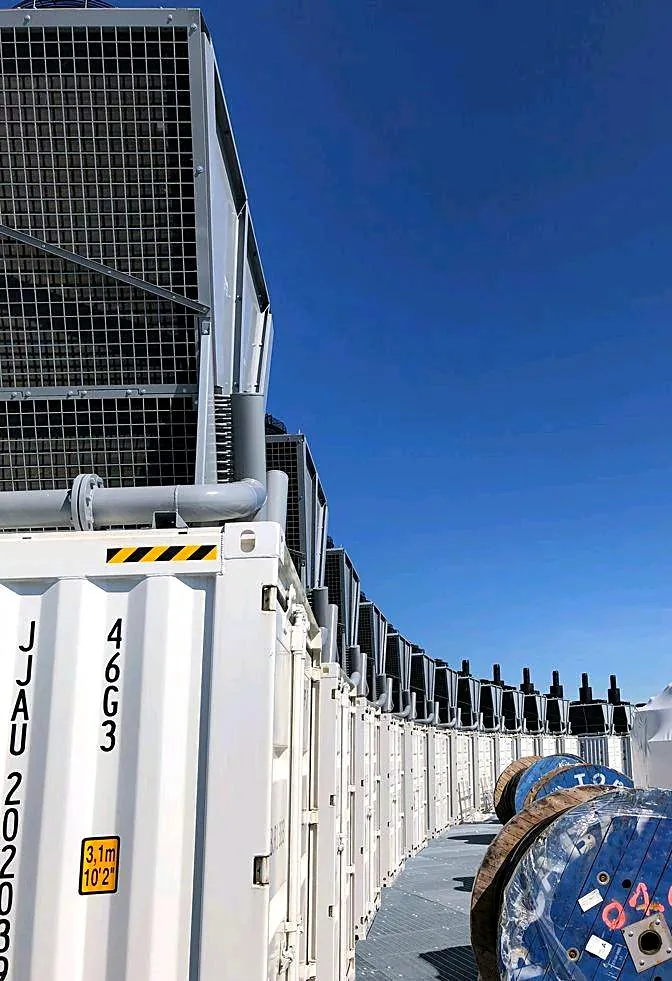
The heart of the unit is the coil: rows of copper or steel tubes, expanded into thin aluminium fins a few millimetres apart. The liquid flows inside the tubes, the air flows between the fins, and the fins multiply the surface on the air side by a factor of ten to twenty, because air is a far poorer carrier of heat than water. Axial fans above or beside the coil move the air; the frame, the collectors, the connections and the control panel complete the unit.
The warm liquid enters the coil at one end and leaves cooler at the other; the air enters at ambient temperature and leaves warmer. The difference between the liquid outlet and the ambient air - the approach - is what the unit has to achieve, and the smaller the approach, the larger the coil. A dry cooler can never cool the liquid below the ambient air temperature; that is the difference to an evaporative cooling tower, and the reason a dry cooler is chosen where water is scarce or the plant must stay dry.
What Decides The Size
Three figures define the duty: the heat to be rejected in kW, the liquid flow and its inlet temperature, and the design ambient air temperature. From these the designer finds the coil surface, the number of rows and the fin pitch, and the fans that deliver the airflow against the coil's pressure drop. A fourth figure, the allowed pressure drop on the liquid side, decides how the tubes are circuited.
The ambient temperature matters more than any other input. A unit designed for 35 °C has a comfortable approach on a European summer day; the same duty at 50 °C has a third less temperature difference to work with and needs a correspondingly larger coil or more air. Altitude thins the air - about 10 % less density per 1,000 m - so a fan moves less mass and the coil needs more airflow or surface again. A hot, high or humid site is therefore stated in the enquiry and on the datasheet, because the capacity printed there belongs to those conditions.
Where Dry Coolers Are Used
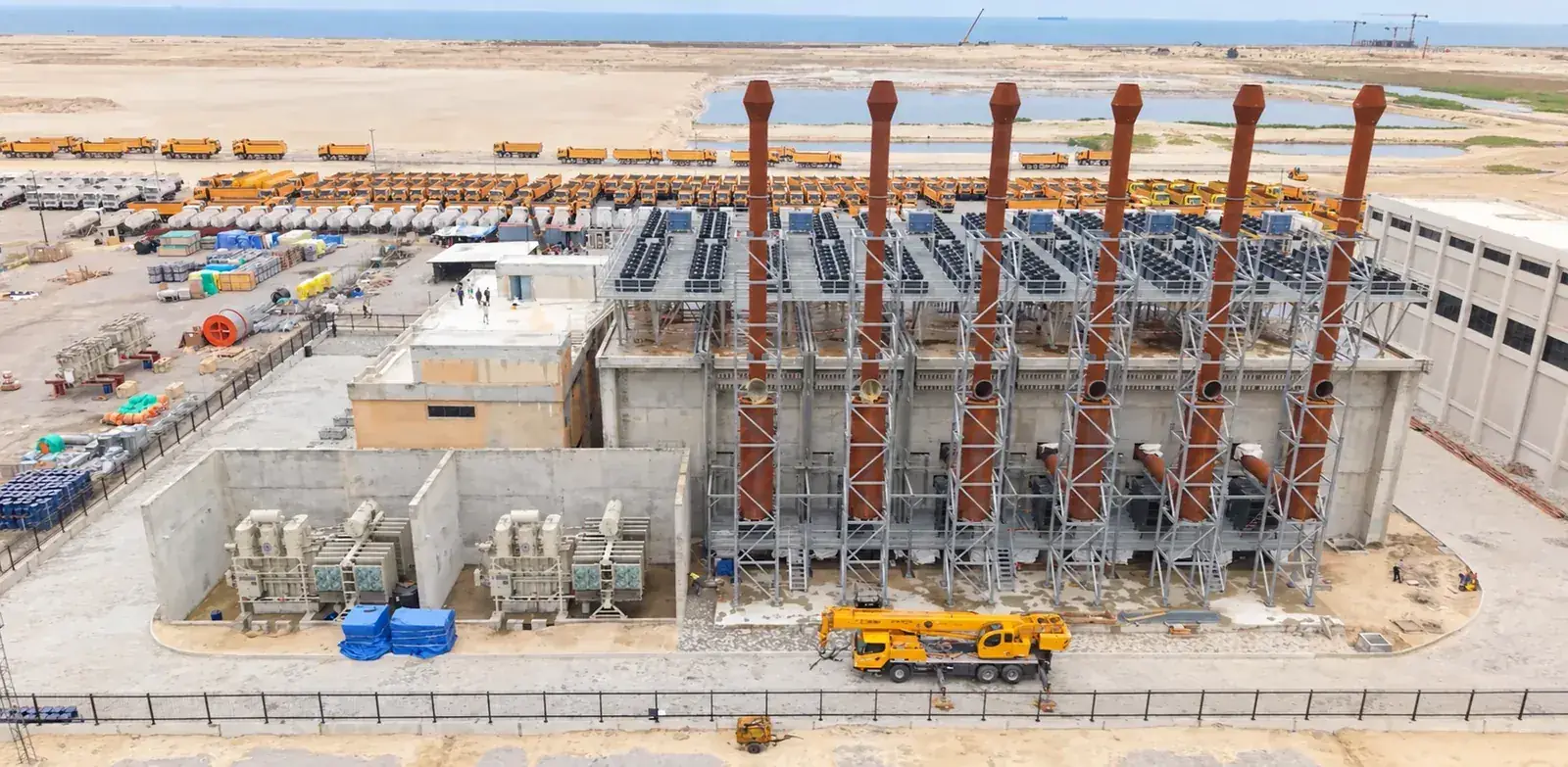
Wherever a liquid has to be cooled and the air is the only heat sink: data centers and their chillers, process cooling in industry, the condensers of refrigeration plants, and above all the cooling circuits of engines. A generator set, a gas engine in a CHP plant or an engine power plant rejects a third of its fuel energy into its coolant, and a dry cooler - the remote radiator - stands outside and takes that heat to the air. Separate low- and high-temperature circuits are built into one casing for modern engines.
The arrangement follows the site: a horizontal unit with fans on top where there is ground, a vertical unit against a louvre where the air is ducted, a V-type unit where many units must stand on a small plot. Speed-controlled EC fans let the unit run quietly at part load and meet a sound limit at the fence; wider fin pitches keep it working on a dusty site; AlMg2.5 fins and epoxy coating keep it alive on a coast.
Dry Cooler, Radiator Or Cooling Tower?
The words overlap. A dry cooler and a remote radiator are the same machine seen from two industries; a radiator in the narrower sense is the engine-mounted cooler on a generator-set skid; a cooling tower is a different machine that evaporates water and reaches below the ambient dry-bulb temperature at the cost of water consumption and treatment. The comparison guide below sets the three side by side.
TECS designs and builds dry coolers as remote radiators for generator sets, power plants, cogeneration and data centers, in horizontal, vertical and V-type arrangements, single circuit or LT/HT, with the datasheet, dimensional drawing, fan curve and acoustic data of every unit. Send the heat duty, the flow, the temperatures and the site conditions, or send the engine data sheet, and the design comes back as a proposal.
In Short
A dry cooler cools a liquid with ambient air through a finned tube coil and fans; nothing evaporates
It cannot cool below the ambient air temperature; the approach decides the size
Heat duty, flow, temperatures and the design ambient are the inputs; altitude and humidity change the result
Horizontal, vertical and V-type arrangements, single circuit or LT/HT
In the generator-set trade the same machine is a remote radiator
TECS builds them for engines, power plants, cogeneration and data centers
Functionally yes: both are finned tube coils with fans that reject heat from a liquid to the air. "Dry cooler" is the HVAC and process term, "remote radiator" the generator-set term; "radiator" alone usually means the engine-mounted unit on the skid.
How cold can a dry cooler make the water?
Never colder than the air. In practice the liquid leaves a few kelvin above the ambient dry-bulb temperature; the closer the approach, the larger and dearer the unit. For temperatures below ambient a chiller or an evaporative cooler is needed.
Does a dry cooler use water?
No. That is its main advantage over a cooling tower: no make-up water, no water treatment, no drift, no legionella risk and no freezing pond in winter. A glycol mixture protects the circuit itself against frost.
What is an adiabatic dry cooler?
A dry cooler with a wetted pad or a spray in front of the coil that cools the incoming air by evaporation on the hottest days only. It gains a few kelvin of approach for a small water consumption and is used where the design ambient is very high.
How is the capacity of a dry cooler given?
As kW rejected at a stated liquid inlet and outlet temperature, a stated flow and glycol percentage, and a stated ambient temperature and altitude. A capacity without those conditions means nothing; the TECS datasheet states all of them.
Send us the heat duty, the fluid temperatures and flow rates, the ambient conditions and the installation limits. We answer with a design proposal - or write to us on WhatsApp.