A generator set is only as reliable as its cooling. On the hottest afternoon of the year, at full load, the radiator still has to carry away the heat from the jacket water, the charge air and often the lubricating oil, while the engine maker's limits on coolant temperature and pressure drop stay respected.
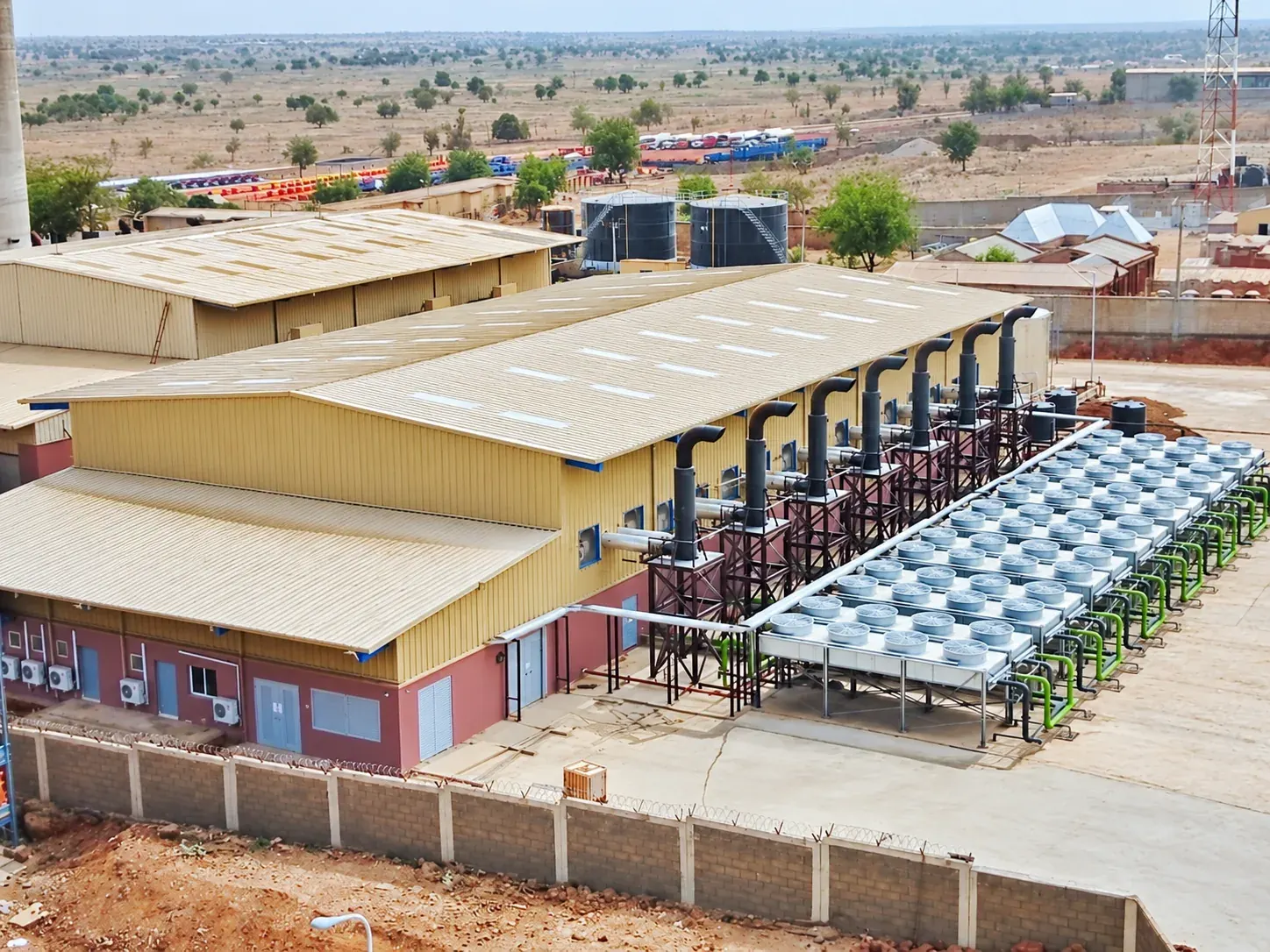
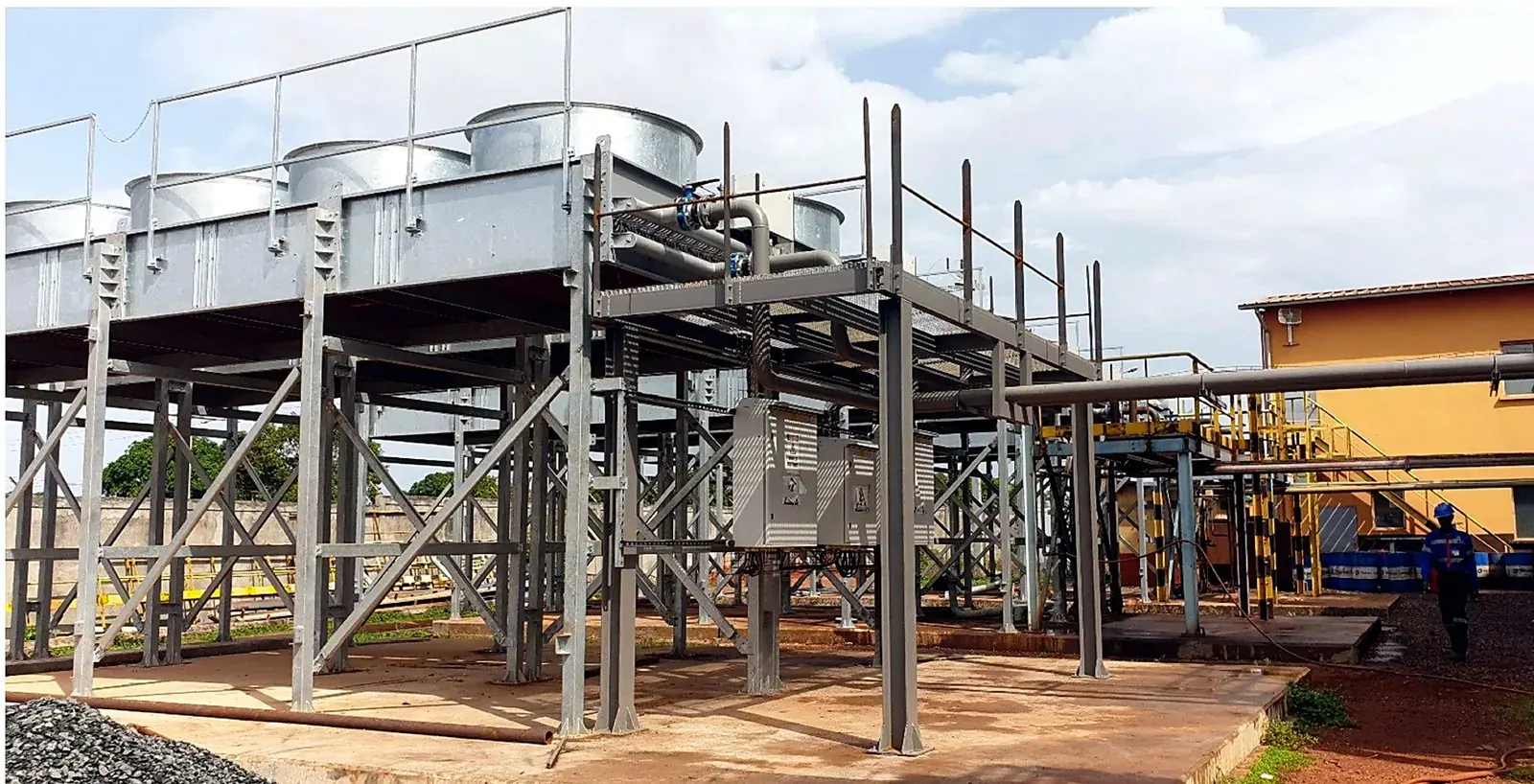
When the radiator cannot sit on the skid in front of the engine - because the set is installed in a building, in a container, in a noise-sensitive area or in a plant with many units - a remote radiator with electric fans takes over. TECS designs and builds remote radiators for diesel and gas generator sets, from a single standby set to multi-engine stations.
Why The Radiator Is Moved Away From The Engine
An engine-mounted radiator has to take its air from the engine room and push it out through the wall. In a closed generator hall that means large openings, ducts and attenuators, and the engine room gets warmer. A remote radiator stands outside, takes fresh air, and leaves the engine room to the engine.
Electric fans also make the cooling independent of the engine speed and load. They can be controlled to the coolant temperature, which lowers the fan power and the sound level whenever the full duty is not needed.
Single Circuit Or LT/HT
Smaller sets often cool everything in one circuit. Larger diesel and gas engines separate the high-temperature circuit, which cools the cylinder jackets, from the low-temperature circuit for the charge air cooler and sometimes the oil. A TECS LT/HT radiator carries both circuits in one casing, under the same fans, with separate coils, headers and connections.
The two sections are designed together for the duty of each circuit and the site ambient, so that the low-temperature circuit, which matters most for engine output, gets the air it needs.
Horizontal, Vertical Or V-Type
Horizontal radiators, with the fans above or below the coil, are the usual choice where there is free ground around the generator house. Vertical radiators suit installations against a wall or behind louvres. V-type radiators carry high capacities on a small footprint and are chosen where many units have to stand side by side, for example on the roof of a data center.
For sets that must work without any electrical supply, TECS also builds mechanical driven radiators with an engine-driven fan.
What TECS Supplies
Remote radiators for diesel and gas generator sets, single circuit or LT/HT
Horizontal, vertical and V-type units, induced or forced draught
EC fans with speed control or AC fans, 50 or 60 Hz
Expansion tanks, level switches, junction boxes and control panels
Coil materials and coatings for coastal, desert and industrial sites
Datasheet, dimensional drawing, fan curve and acoustic data with every offer
A remote radiator is an air-cooled radiator with its own electric fans that stands away from the engine. The engine coolant is pumped to it through pipework and returns after giving up its heat to the air.
Can one radiator cool both the jacket water and the charge air?
Yes. An LT/HT radiator has two separate coils in one unit, one for the high-temperature jacket water circuit and one for the low-temperature charge air circuit, cooled by the same fans.
Which coolant can the radiators work with?
Water and water with ethylene or propylene glycol. The design is made with the properties of the actual mixture, since glycol changes the heat transfer and the pressure drop.
Do you build radiators for 60 Hz and for hot climates?
Yes. Fans are selected for 50 or 60 Hz supplies, and every unit is designed for the ambient temperature and altitude given for the site.
How quickly can I get an offer?
Send the engine cooling data and the site conditions. The offer comes with a datasheet, a dimensional drawing and the sound data of the selected unit.
Send us the heat duty, the fluid temperatures and flow rates, the ambient conditions and the installation limits. We answer with a design proposal - or write to us on WhatsApp.