Industrial Dry Coolers

Dry coolers

A dry cooler rejects the heat of a closed water or glycol circuit to the ambient air without evaporating water. TECS designs and builds dry coolers for process cooling, chiller free cooling, engine and CHP circuits and data centers, each one sized for its own duty, ambient and sound limit.

Because the circuit stays closed, there is no water consumption, no water treatment and no plume, and with the right glycol mixture the unit keeps working through freezing weather.

Request a design Send us files

Horizontal And V-Type Layouts

Horizontal dry coolers carry the coil flat with the fans above or below it and suit single units, roofs and open sites. V-type dry coolers place two inclined coils under a common row of fans and put more cooling on the same ground area, which matters when many units stand side by side.

Coils Built For Long Service

The coils are copper tube with aluminium fins as standard. For coastal, desert, dusty and industrial atmospheres the fins can be AlMg2.5 or epoxy coated and the casing galvanised or painted to the corrosion category of the site.

Fans And Sound

EC fans with integrated speed control are the usual choice: at part load and at night they run slower, use less power and make less noise. AC fans with external speed control are available where the specification asks for them. The sound level at the distances given in the enquiry is part of the design from the start.

Where Dry Coolers Are Used

Process and machine cooling, chiller free cooling and economiser circuits, engine and CHP cooling and data center cooling loops. Where the process fluid must not reach the coil, a plate heat exchanger separates it from the glycol circuit of the dry cooler.


Typical Scope Of Supply

  • Finned-tube coil with headers and flanged connections
  • Galvanised or painted steel casing and support legs
  • EC or AC axial fans with guards
  • Junction box or control panel with isolators
  • Speed control where requested
  • Factory pressure test and function test
  • Datasheet, dimensional drawing, fan curve, acoustic data, IOM manual

Technical Overview

Arrangement
Horizontal or V-type
Fluids
Water and glycol mixtures
Fans
EC / AC axial fans, 50 or 60 Hz
Materials
Cu/Al, AlMg2.5, epoxy coating, galvanised or painted casing
Options
Speed control, control panel, protection guards

Questions We Are Often Asked

What is the difference between a dry cooler and a radiator?

Both are air-cooled heat exchangers with a finned coil and fans. "Radiator" is the usual word for engine cooling, "dry cooler" for process, HVAC and data center circuits. TECS designs both on the same coil and fan range.

Does a dry cooler use water?

No. The fluid stays in a closed circuit and the heat goes to the air through the coil, so there is no evaporation and no water consumption.

Can a dry cooler work below freezing?

Yes, with a glycol mixture chosen for the lowest site temperature. The glycol content is part of the design because it changes the capacity of the unit.

What do you need for a quotation?

The heat to be rejected or the engine model, the coolant and its glycol content, the flow rate or the inlet and outlet temperatures, the design ambient temperature and altitude, the sound limit with its distance, and any space limit. An engine manufacturer's datasheet covers most of it.

Contact Us

Send us the heat duty, the fluid temperatures and flow rates, the ambient conditions and the installation limits. We answer with a design proposal - or write to us on .

I am interested in
TECS
AXON Technic
One enquiry reaches both companies of the group.
Send us files

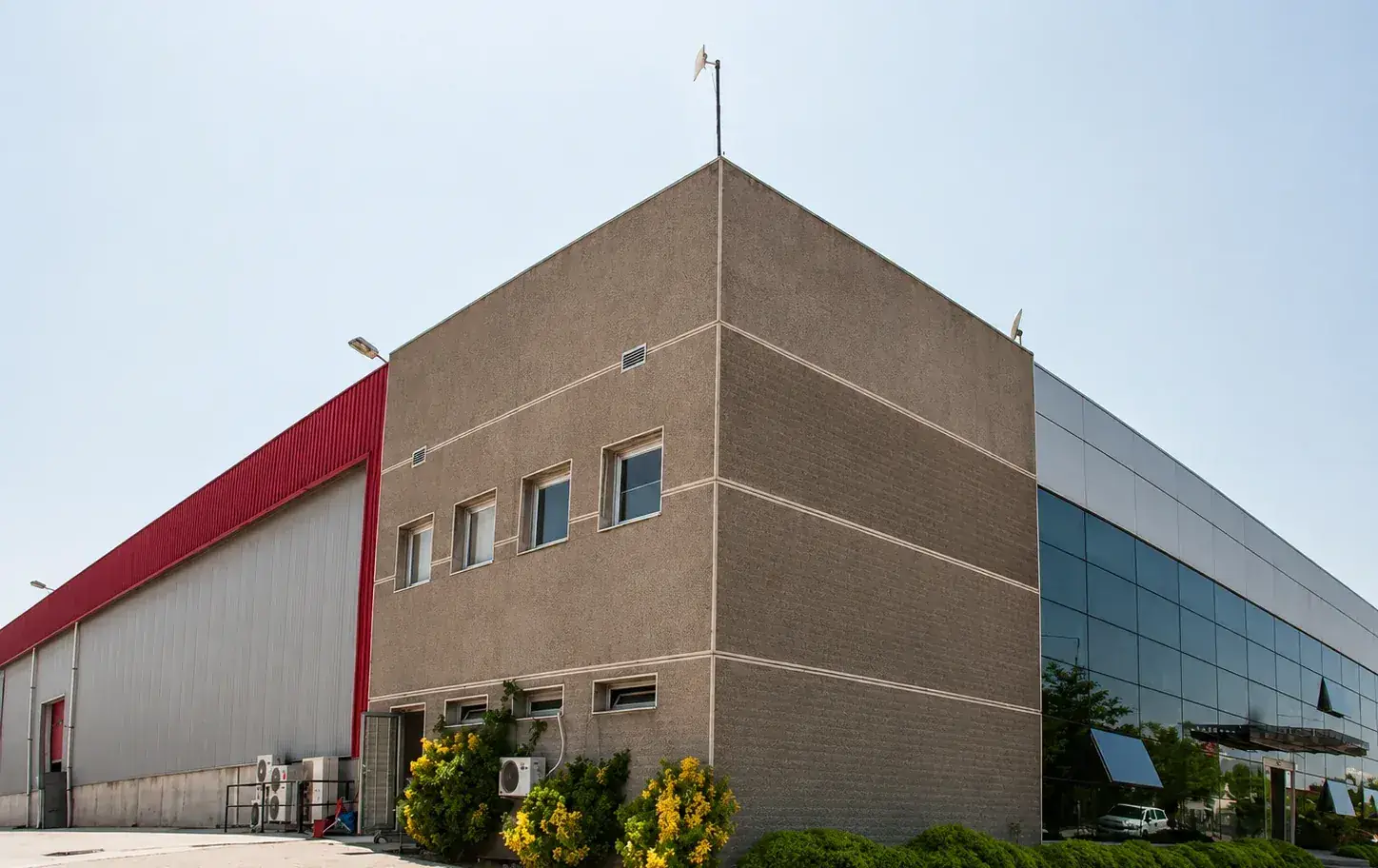
TECS Engineering factory, Menemen, İzmir