LT/HT Radiators For Engine Power Plants

Power plant radiators

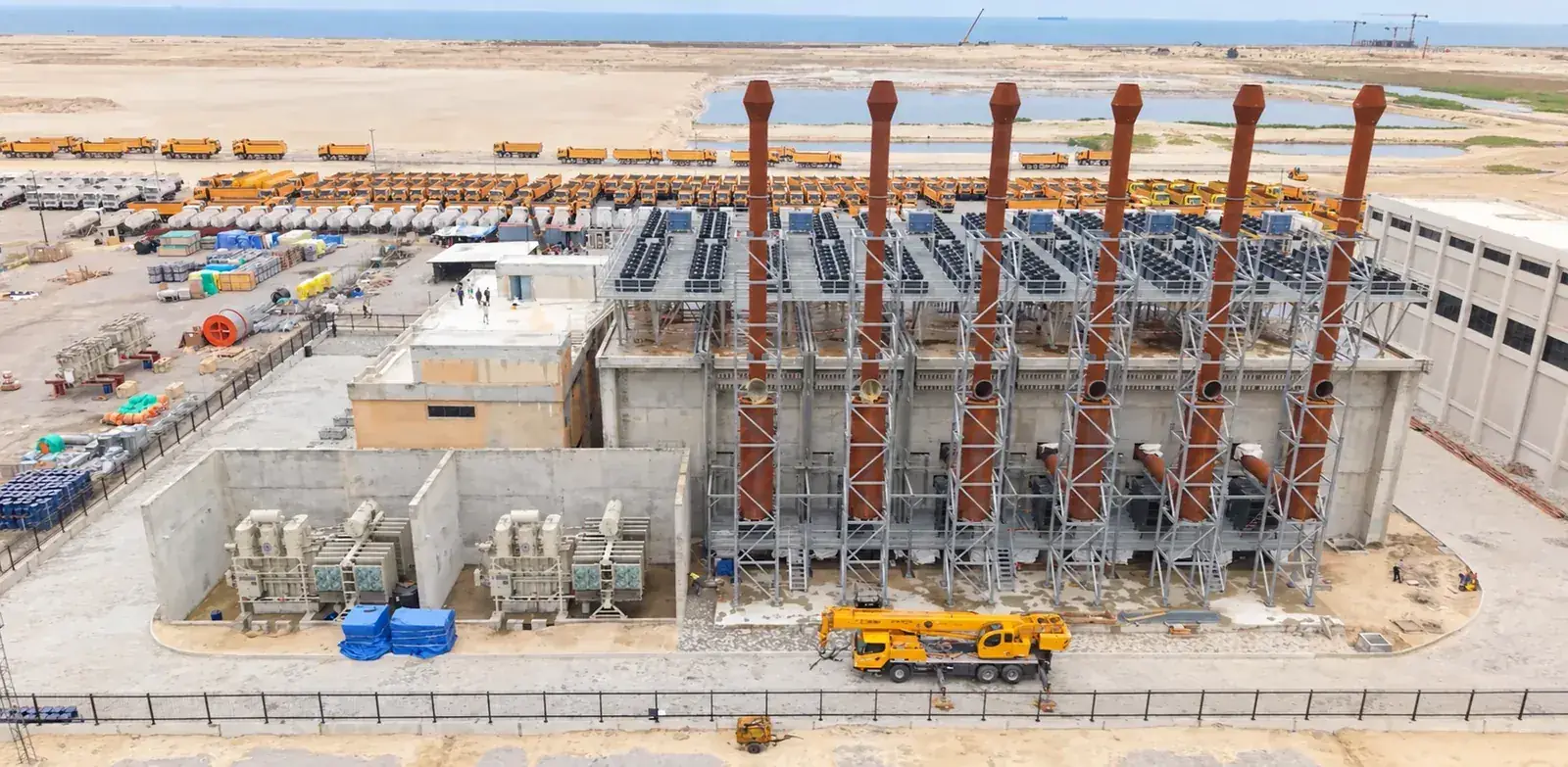
In an engine power plant the radiators are no longer a single unit next to a single engine. Ten, twenty or fifty generator sets run side by side, each with its own LT/HT radiator, often on an elevated steel structure. The radiator bank becomes one of the largest structures on the site, and it decides whether the plant keeps its rated output in summer.

TECS builds LT/HT radiators for gas and diesel engine power plants, including heavy fuel oil stations, and supplies them as a coordinated bank: units, supports, access and connections planned together.

Radiator bank of an engine power plant

A Bank Behaves Differently From One Unit

Warm air leaving one radiator can be drawn into the next one. Inside a long bank, the units in the middle see warmer air than those at the edge, and a wind from the wrong side can make it worse. A radiator selected only for the design ambient, without looking at the bank, can lose capacity exactly on the days it is needed.

For that reason the layout of the bank - spacing, height above ground, the position of buildings and stacks - is part of the radiator design. Where a site is tight, TECS studies the air paths with CFD before the units are fixed.
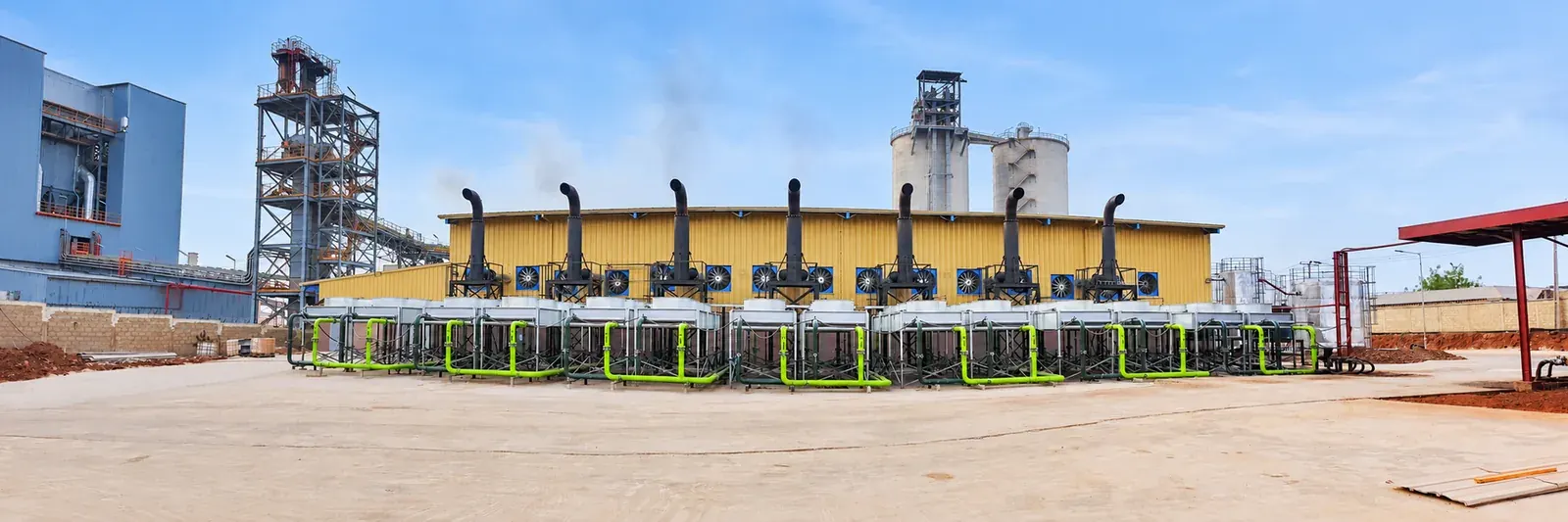
LT/HT radiators of a multi-engine station

Two Circuits, One Unit

Gas engines in particular are sensitive to the charge air temperature: if the low-temperature circuit runs too warm, the engine has to reduce its output. An LT/HT radiator places the low-temperature coil where it sees the coolest air, and the high-temperature coil after it, so one row of fans serves both circuits.

Where the plant recovers heat, the radiator often works in parallel with a heat recovery system and has to take over the full high-temperature duty whenever the heat consumer stops.

What TECS Supplies

  • LT/HT and single-circuit radiators for gas and diesel engines, including HFO plants
  • Complete radiator banks with steel support structures, platforms and walkways
  • Pipework, expansion tanks, level switches and control panels
  • Airflow and recirculation studies for the bank (CFD) where the site requires them
  • Corrosion protection for the site category, from C3 to C5-M
  • Factory pressure and function tests, documentation for each unit
See the products

What To Send With An Enquiry

  • Engine type, number of engines and the engine maker's cooling data
  • Heat rejection, flow and temperatures of the LT and HT circuits
  • Site ambient, altitude, dust and the corrosion category
  • Plant layout: where the radiators can stand and at which height
  • Sound limits at the boundary or at the nearest neighbour
  • Whether heat is recovered and how the radiators must work with it
Send an enquiry

Questions We Are Often Asked

Why do engine power plants use LT/HT radiators?

Large engines cool the cylinder jackets in a high-temperature circuit and the charge air in a low-temperature circuit. An LT/HT radiator serves both with one set of fans and one footprint.

What is radiator recirculation?

It is warm air from a radiator, or from its neighbours, flowing back into the radiator inlet. It raises the air temperature at the coil and reduces the capacity, so it has to be considered in the layout of a bank.

Can you supply the support structure as well?

Yes. TECS supplies radiators on elevated steel structures and platforms with access walkways and pipework, designed and delivered as one package.

Do you build radiators for heavy fuel oil power plants?

Yes. TECS radiators are in service at multi-engine HFO power stations.

Contact Us

Send us the heat duty, the fluid temperatures and flow rates, the ambient conditions and the installation limits. We answer with a design proposal - or write to us on .

I am interested in One enquiry reaches both companies of the group.
Send us files

TECS Engineering factory, Menemen, İzmir