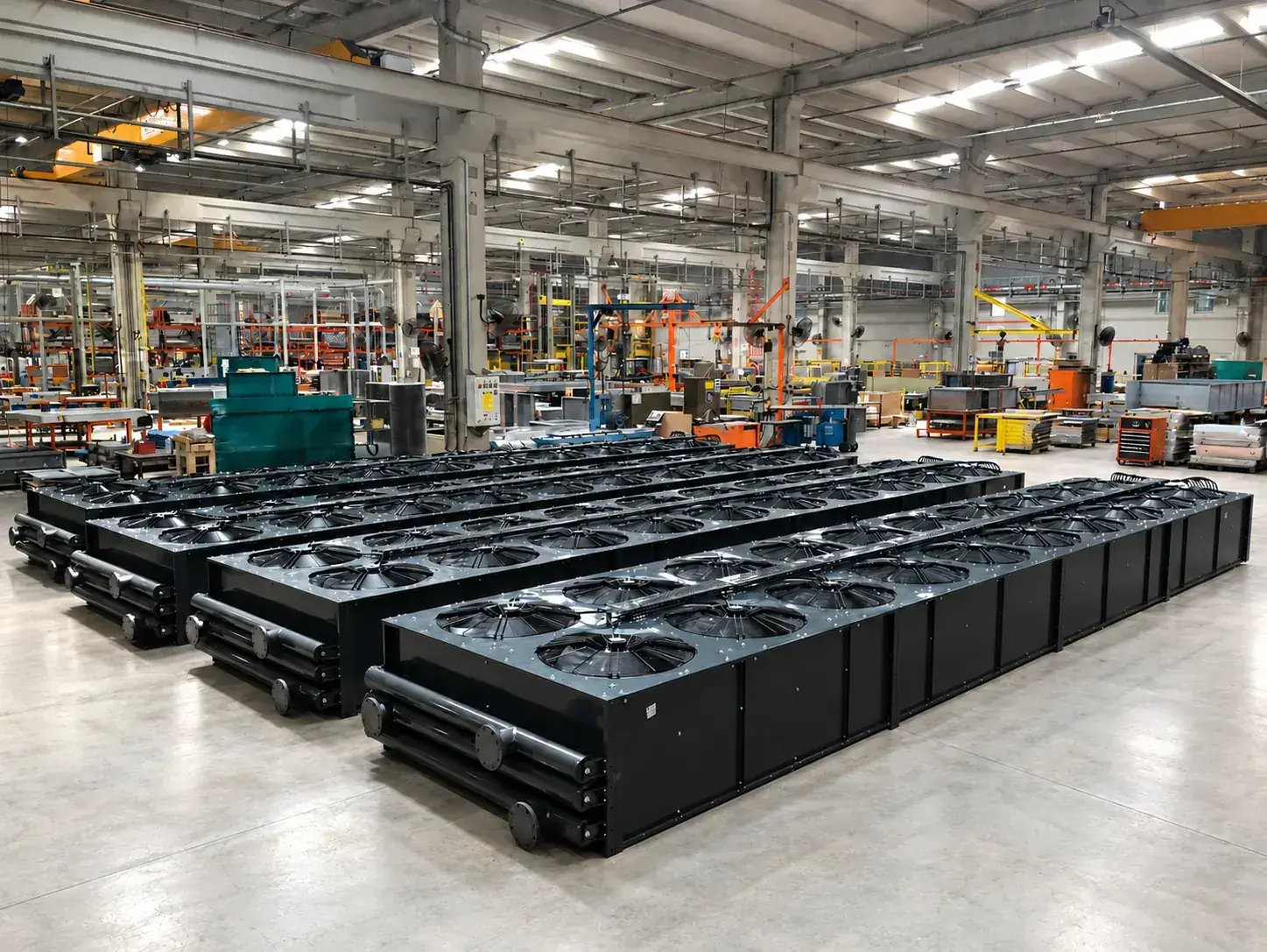
Emergency Coolers For CHP Plants

Emergency coolers

A combined heat and power plant earns its money by selling electricity and heat at the same time. But the heat consumer - a district heating network, a greenhouse, a factory - does not always take all the heat the engine produces. On a warm day, during maintenance in the network or when a process stops, the heat has nowhere to go.

Without an emergency cooler the engine would have to reduce its output or shut down. With one, the surplus heat is rejected to the air and the engine keeps producing electricity. TECS builds these emergency coolers, also called dump radiators or surplus heat coolers, for gas engine CHP plants.

Emergency cooler for a CHP plant

When The Emergency Cooler Takes Over

The emergency cooler sits in the engine's high-temperature circuit, usually after the heat exchanger that feeds the heat consumer. A three-way valve sends coolant through it only when the return temperature from the consumer rises. In some plants it carries a small part of the heat for many hours; in others it has to take the full high-temperature duty within minutes.

The design must cover the worst case: full engine load, no heat taken by the consumer, on the hottest day of the site. That case decides the size, while the everyday case decides how quietly and economically the fans run.
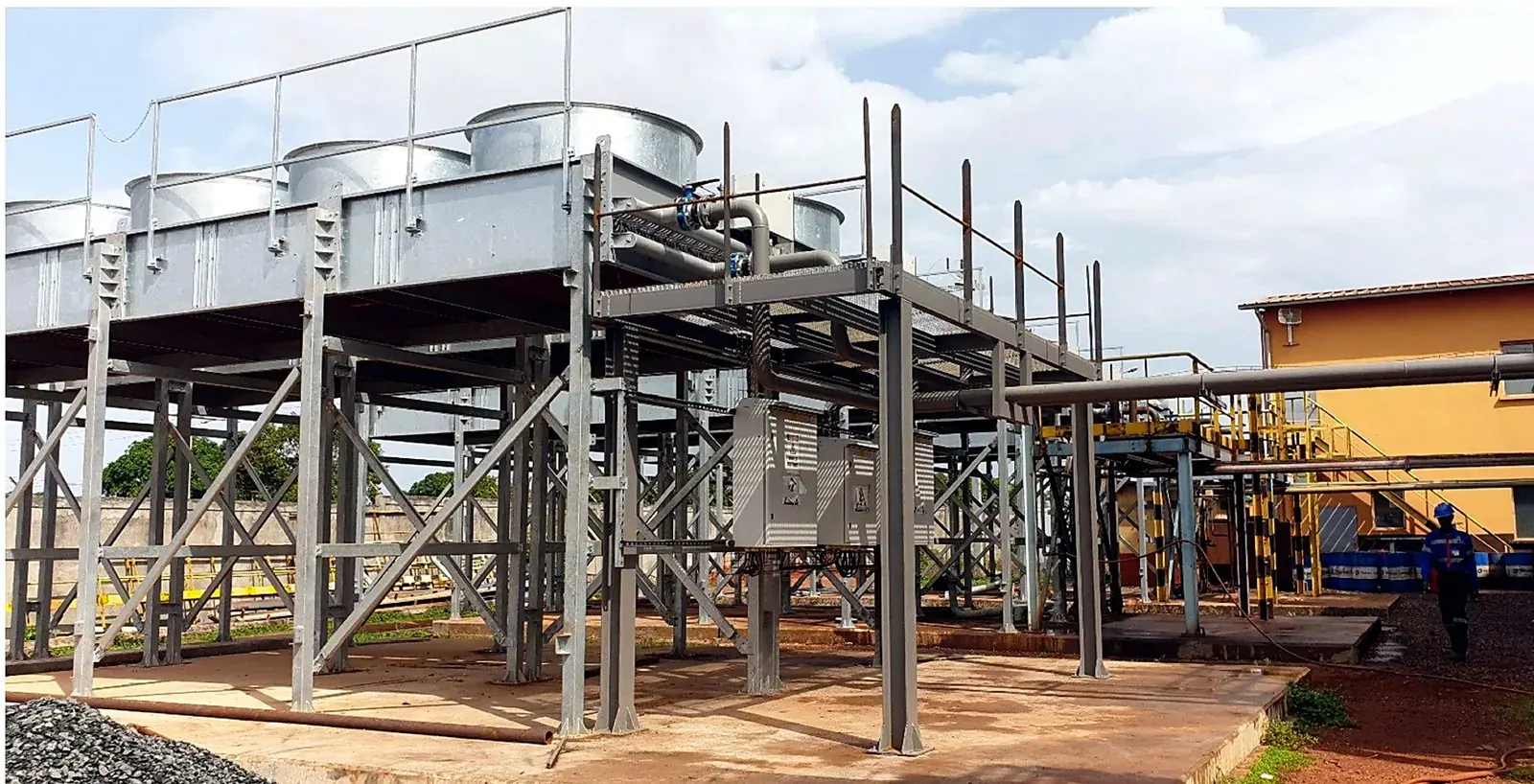
LT/HT cooler for a gas engine CHP unit

The Low-Temperature Circuit Too

Gas engines also need their charge air cooled in a low-temperature circuit. Where that heat is not recovered, it has to be rejected all year round. TECS combines the low-temperature cooler and the emergency cooler in one LT/HT unit where the layout allows, or supplies them as separate units.

For plants that also need heat delivered in a controlled way, TECS builds heating modules: the pumps, heat exchangers, valves and controls between the engine and the heat consumer, prepared on one skid.

What TECS Supplies

  • Emergency coolers for the high-temperature circuit of CHP engines
  • LT coolers for the charge air circuit, alone or combined as LT/HT units
  • EC fans with speed control for low sound and low power at part load
  • Heating modules with pumps, plate heat exchangers and controls
  • Expansion tanks, level switches and control panels
  • Units for containerised CHP plants and for roofs and platforms
See the products

What To Send With An Enquiry

  • Engine type and output, the heat of the HT and LT circuits
  • How much of the heat the emergency cooler must reject, and for how long
  • Coolant temperatures and the glycol content
  • Site ambient, altitude and where the cooler will stand
  • Sound limits, especially for plants near homes
  • Whether a heating module is needed as well
Send an enquiry

Questions We Are Often Asked

What is an emergency cooler in a CHP plant?

It is a radiator in the engine's high-temperature circuit that rejects the heat the consumer cannot take, so the engine can keep running at full electrical output.

Is an emergency cooler the same as a dump radiator?

Yes. Emergency cooler, dump radiator and surplus heat cooler are names for the same function.

Can the emergency cooler and the LT cooler be one unit?

Yes. Both circuits can be built into one LT/HT unit with separate coils under common fans, where the layout and the duties allow.

Does TECS also supply the heat recovery side?

TECS builds heating modules with pumps, plate heat exchangers, valves and controls for the connection between the engine and the heat consumer.

Contact Us

Send us the heat duty, the fluid temperatures and flow rates, the ambient conditions and the installation limits. We answer with a design proposal - or write to us on .

I am interested in One enquiry reaches both companies of the group.
Send us files

TECS Engineering factory, Menemen, İzmir